
Sitting across a kitchen table from a family who had just buried their mother, I watched one question stop the whole room cold. Does everyone have to agree before we can sell? Three siblings held three different opinions. One house in a Garland subdivision kept collecting carrying costs by the week. Getting that answer wrong costs money and relationships. Sometimes it costs months in probate court too, and the rule is not a simple yes or no.
The Short Answer, and Why It Gets Complicated
Most Texas executors can sell a home without every beneficiary signing off. The fuller picture depends on the type of probate, the wording of the will, and whether a sale genuinely serves the estate’s interests. Those three variables do a lot of work. Miss any one of them and an executor can face a lawsuit, or watch a transaction freeze days before funding.

Dallas-Fort Worth adds its own pressure right now. The median listing price across the Dallas-Fort Worth-Arlington metro was $439,000 in July 2026, with homes sitting a median of 54 days on market, according to Federal Reserve Economic Data. For an estate paying property taxes and insurance every month, that timeline matters. I have watched families burn through months of equity by waiting too long to sort out who could sign.
What Is an Executor’s Legal Authority to Sell Property in Texas?
A probate attorney corrected me on this once and it stuck. An executor’s power to sell flows mostly from the will, though not entirely.
Many Texas wills carry a power of sale clause. Where the will explicitly authorizes the executor to sell real estate, the executor needs no permission from the heirs, even over their objections. That clause is where most of an independent executor’s authority lives. It is also why the will is the first document I pull when someone questions a sale.
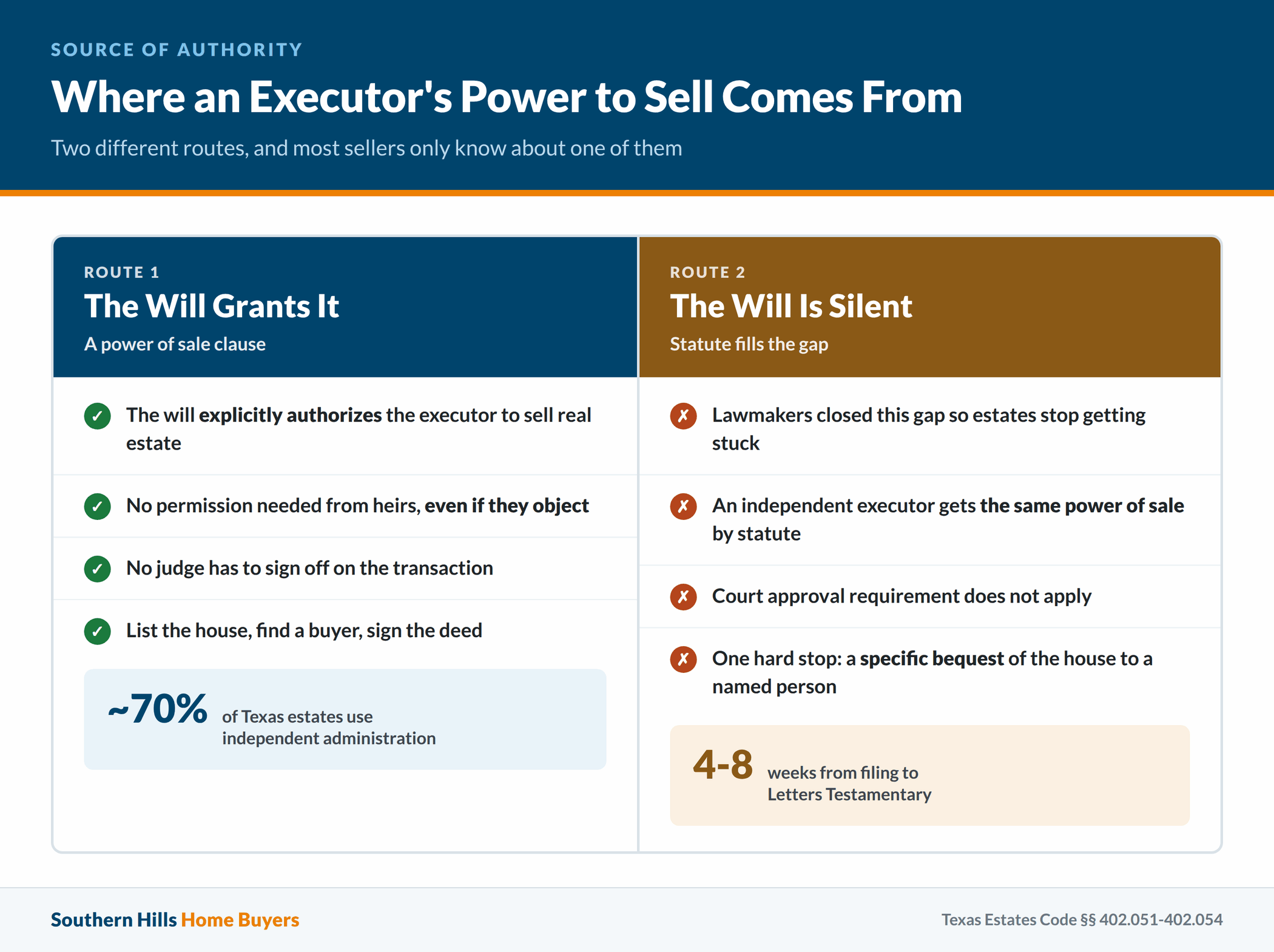
What happens when the will says nothing about selling property? The Texas Estates Code provides a statutory backup. Lawmakers changed the law to fix a common problem where estates got stuck. As confirmed at FindLaw’s Texas Estates Code § 402.052, an independent executor holds the same power of sale as a personal representative in a supervised administration, for the same purposes. The difference is that no court approval is required, unless the terms of a will limit it. That last part matters more than it sounds.
Before any of that authority kicks in, the court has to issue Letters Testamentary, usually within four to eight weeks of filing. No letters, no authority to sign for the estate. No title company in Texas will move forward without them either. And if nobody was named at all, so the court has to appoint someone, the rules shift again. We cover that in our guide on whether an estate administrator can sell property in Texas.
What Fiduciary Duties Does an Executor Owe to Beneficiaries?
A family called me about a house in Mesquite where the executor had sold to his own business partner. The price sat well below what the other heirs believed the market would support. They were furious, and they had every right to be. Self-dealing like that is exactly what probate courts exist to catch.
Authority to sell and the right to sell at any price are two very different things. An executor is a fiduciary. That legal term means they must act in the absolute best interest of the estate and its beneficiaries. You cannot sell the property to yourself or to a friend at a discount. You must try to get fair market value for the home. That means testing the market, not taking whatever number closes fastest.
Selling to a connected buyer at a sweetheart price is a potential breach. So is dragging out the process to run up administrator fees, or favoring one heir over another in how proceeds get split. Those breaches can trigger litigation costing far more than the original dispute was worth. An executor who understands this from day one tends to handle the whole process with more care. I have watched that awareness alone change the tone of a sale.
What Happens When a Will Is Silent on Selling Property?
One will named an independent executor but said nothing at all about selling the family home in Plano. Everyone assumed she was stuck. She was not.
When a will creates an independent administration without granting a power of sale, the Texas Estates Code fills the gap. That executor gets the same power of sale as a personal representative in a supervised administration, minus the court approval requirement. The procedural steps that apply to supervised administration do not apply either.
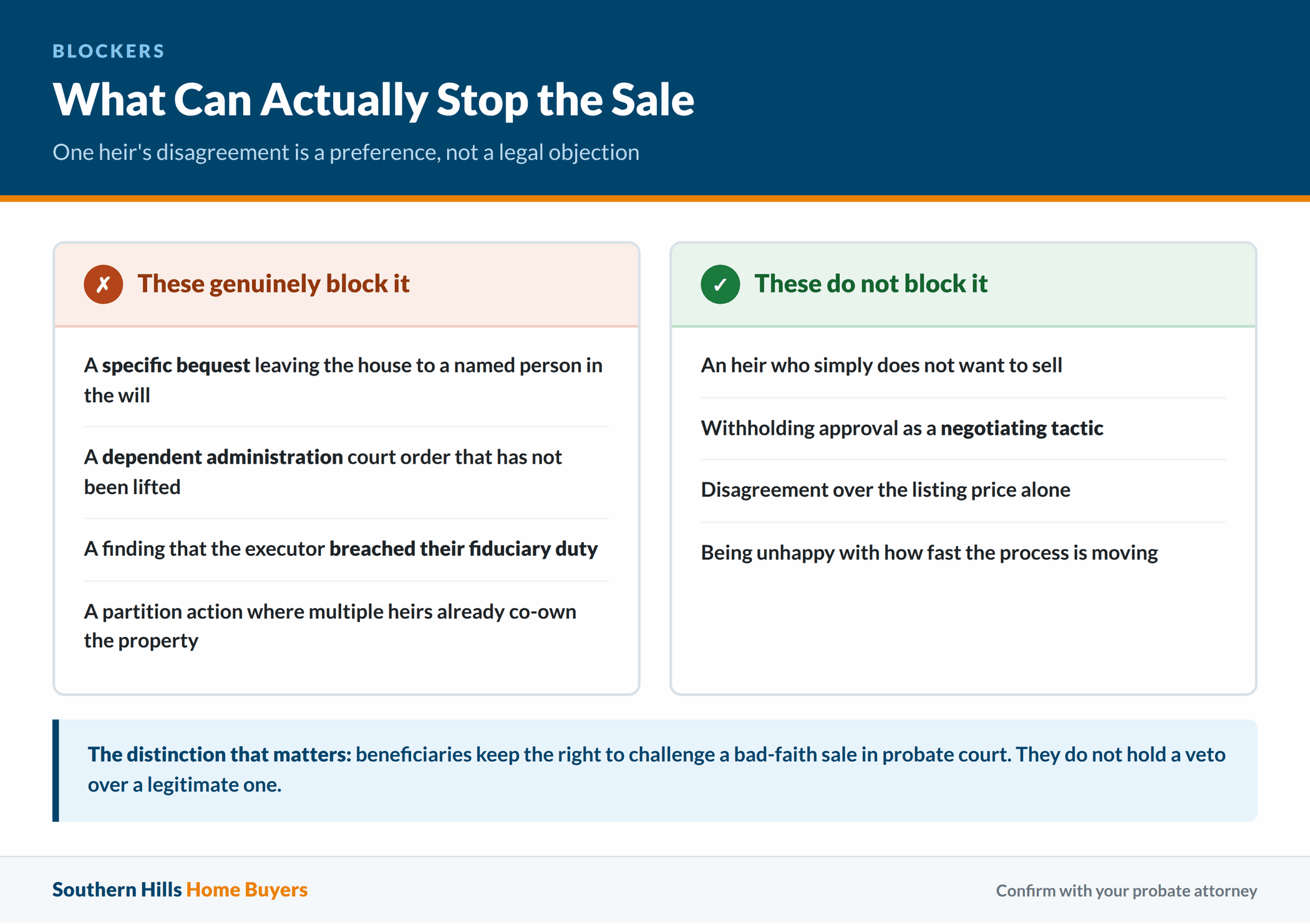
There is one real exception. If the will specifically leaves the house to a named person as a specific bequest, the executor generally cannot sell it. The narrow carve-out arrives when no other assets exist to pay the estate’s debts, which lets a cash-poor estate override even a clearly stated bequest. That is the single scenario where a silent will creates a genuine hard stop.
A good probate attorney can read the will’s language and give you a clear answer in a short consultation. Interpreting it without counsel is one of the most common ways executors go wrong. Some stall a sale that never needed stalling. Others overstep and open themselves to a breach of fiduciary duty claim.
How Does Dependent Administration Affect a Property Sale?
People walk into dependent administration expecting independent administration with a bit more paperwork. The requirements run far deeper than that.
Dependent administrators must petition for court approval before accepting any buyer’s offer. Texas law also requires written notice of the sale, filed with the court and mailed to all heirs. You cannot simply sign with the highest bidder. You take that offer back to the court, keep your buyer patient through the wait, and file a motion asking permission to sell. Then the judge reviews the contract to confirm the terms are fair to the estate.
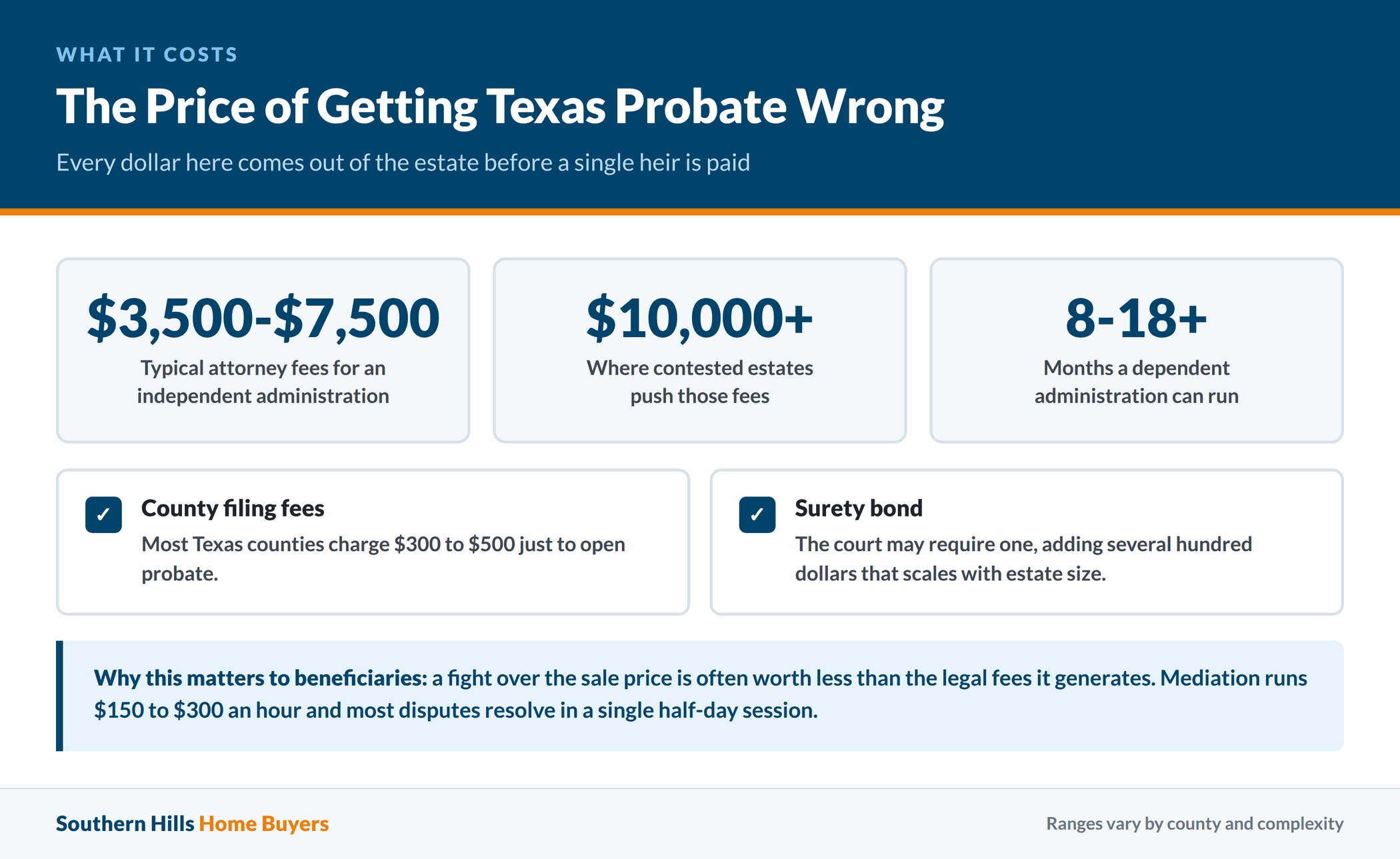
Court-supervised administration takes considerably longer, running eight to eighteen months or more because of the mandatory oversight. In a market where homes already sit longer than they did two years ago, that extra time carries real financial weight. Interest, insurance, and lawn service on an empty house keep running the whole time. Every dollar of it comes out of the estate before beneficiaries see anything.
Can an Executor Sell a House Without All Beneficiaries Approving?
With a metro median listing price well above $400,000, the stakes on a probate sale through the Metroplex run high. Nobody along the I-35 corridor should be guessing at these rules.
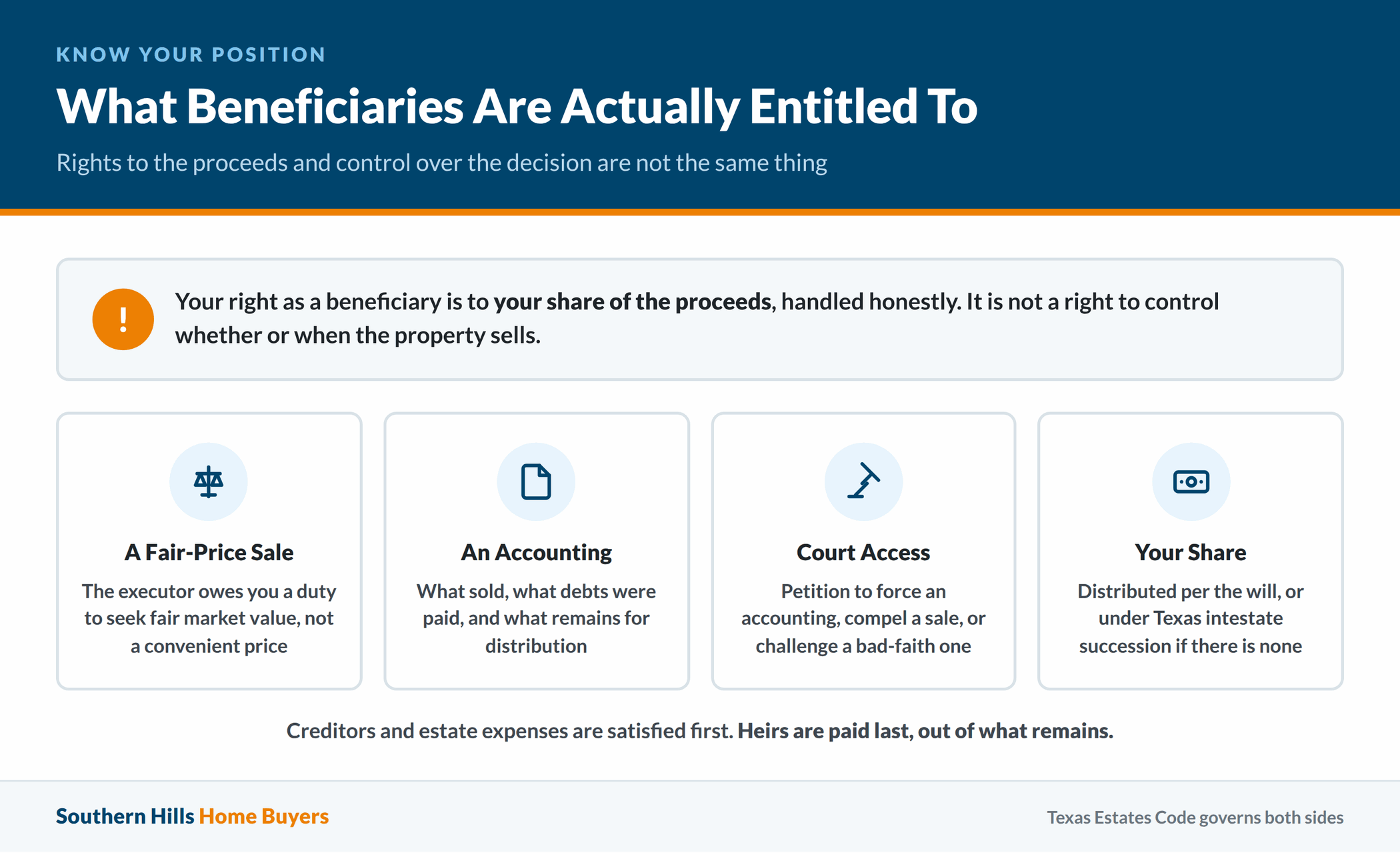
In many cases a Texas executor may sell estate property without advance permission from beneficiaries, particularly where the will grants the authority or the estate qualifies for independent administration. Beneficiaries hold no blanket veto. They can object if the executor abuses their authority, but disagreement alone cannot block a valid transaction.
According to Texas Estates Code Section 402.002, an independent executor has authority to take any action a court-supervised representative could take, with no court order needed. List the house, find a buyer, sign the deed. This regularly surprises beneficiaries who assumed they had a vote. If you are weighing a traditional listing against a direct sale while the family sorts this out, how Southern Hills Home Buyers works lays out the difference in plain terms.
When Is an Executor Selling a House a Problem in Texas?
Authority has limits. Some executors push past them without realizing they are doing it.
Selling below fair market value is the most common problem. Where beneficiaries can show the price was unreasonably low, and especially where the buyer had a personal relationship with the executor, a breach of fiduciary duty claim becomes very viable. Courts take it seriously.
Self-dealing is the other. An executor cannot buy the property themselves, or sell it to a family member at a discount, without court oversight and usually beneficiary consent. Conflict of interest is not merely an ethical question in Texas probate. It can unwind a completed transaction. Texas executors must also give written notice to all beneficiaries about the sale of significant assets. Skipping that notice hands unhappy heirs a procedural hook.
Can Heirs or Beneficiaries Block a Probate Property Sale?
A disputed estate in Arlington sat under contract for four months while heirs argued over price. Blocking a sale outright is harder than most people assume.
Any beneficiary who believes the executor is acting improperly can petition the probate court for relief. Where objections get raised, the matter may need to be resolved there. Filing takes time. Local judges hear these petitions regularly, and the process moves at its own pace. A judge then weighs whether the executor’s decision was a legitimate exercise of authority or a genuine breach of duty.
What beneficiaries cannot do is withhold approval as a negotiating tactic when the executor holds proper independent authority. “I do not want to sell” is a preference, not a legal objection. Preferences do not override a court-issued authority to administer an estate.
Partition lawsuits are a separate matter. If multiple heirs already jointly own the property rather than holding a future interest under a will, a partition action can force a sale or a court-ordered division. Partition is expensive and slow, and also legitimate. We walk through how that plays out in our guide on whether heir property can be sold in Texas.
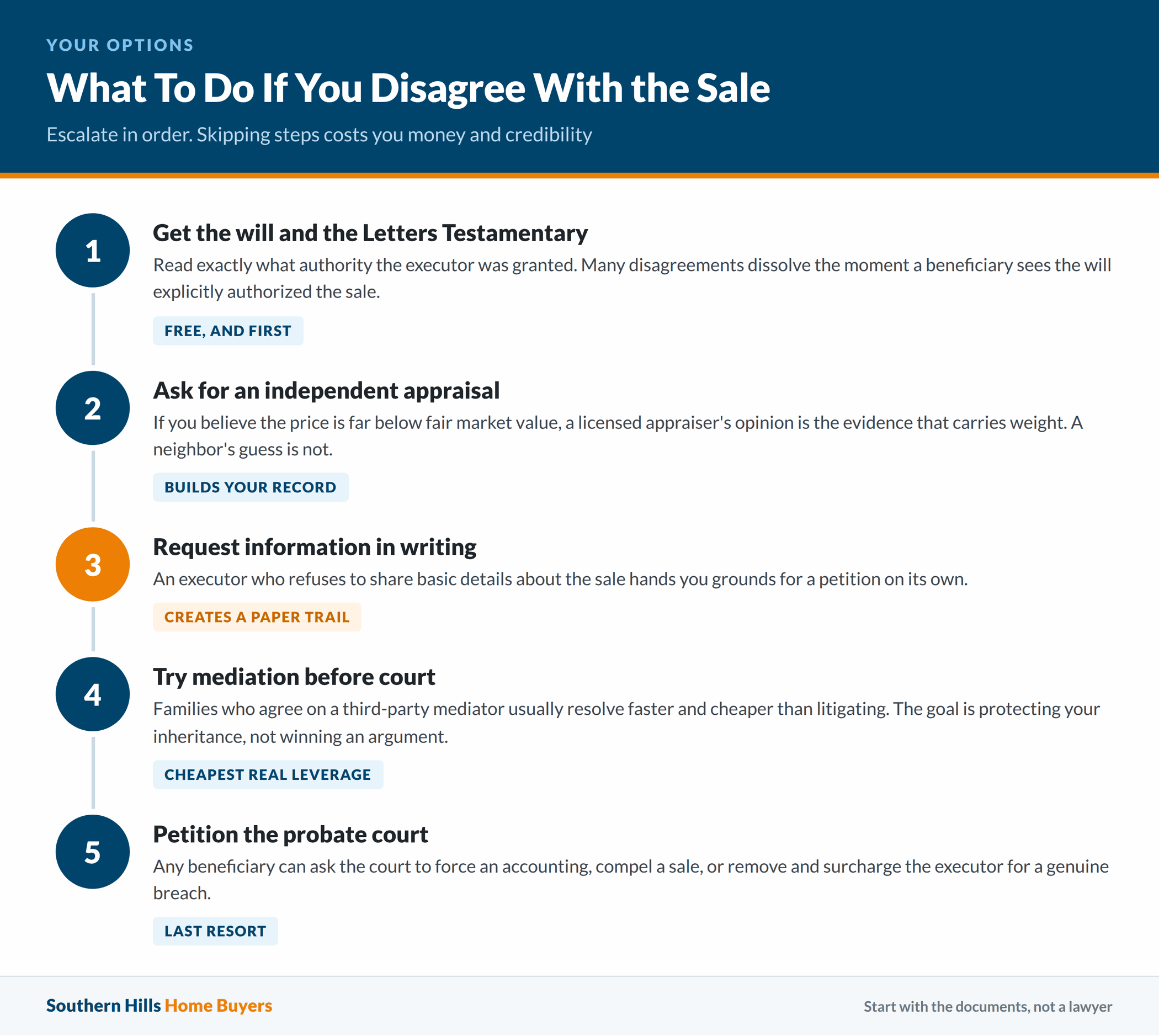
What Steps Can You Take If You Disagree With the Decision to Sell?
“There is nothing I can do” is something I hear from worried heirs constantly. It is not true.
Mediation works surprisingly often here. Families who can agree on a third-party mediator frequently reach resolution faster and cheaper than the courts allow. The goal is not winning an argument. It is protecting your inheritance interest while keeping the estate’s costs under control. A prolonged legal fight benefits the attorneys far more than the heirs.
What Are the Risks of Refusing to Cooperate?
What happens if a beneficiary simply digs in and refuses to participate?
When an executor holds proper independent authority, a non-cooperating beneficiary generally cannot stop the sale. The executor signs the deed, title transfers, and the objecting heir still receives their share of the proceeds under the will or intestacy law. Refusing to cooperate does not redirect the money. It delays the money and adds legal fees that shrink everyone’s share.
Prolonged resistance can also trigger a request to remove a beneficiary’s standing to object, or to compel distribution. Texas probate judges are not sympathetic to delay that serves no purpose except frustration. Where an objection lacks legal basis, a judge may award attorney’s fees against whoever brought the frivolous challenge.
The other risk is losing leverage. A beneficiary who starts cooperative, raises legitimate concerns through proper channels, and works constructively with the executor is far more likely to be heard than one who stonewalls from the beginning. Cooperation also keeps more authority over the timeline where it belongs. Obstruction rarely produces better outcomes. It produces longer timelines.
Who Gets the Money When a Probate Property Sells?
Getting the distribution order wrong is one of the most expensive mistakes an estate can make. It happens more often than it should.
Proceeds from a probate sale do not go straight to beneficiaries. Creditors and estate expenses come first. Funeral costs, outstanding taxes, attorney’s fees, court filing fees, and any valid creditor claims all get addressed before the heirs see a dollar. The full order of priority is laid out in our walkthrough on selling a house in probate in Texas.
For 2025, estates valued above $13.99 million including lifetime taxable gifts may trigger the federal estate tax, which must be paid before distribution. Most Texas families will never reach that threshold. For larger estates in areas like Highland Park or Westlake, though, it is a real consideration worth verifying with a tax professional before closing.
Once legitimate debts are satisfied, remaining proceeds flow to beneficiaries under the will’s terms, or under Texas intestacy law where no will exists. The county clerk’s deed records reflect the chain of title from the estate sale forward. Each beneficiary’s distribution should be documented in writing before the estate closes.
A family I worked with in McKinney found out late that the estate owed back property taxes the executor had not accounted for. Three beneficiaries were already spending money they thought was coming. The sale still closed. The distribution came in smaller than anyone expected, and the family was blindsided. A clear accounting of estate obligations before closing would have set expectations from the start. If the property itself is what you are inheriting rather than cash, our guide on selling an inherited house in Texas covers what comes next.
Frequently Asked Questions
Can an heir sell property without all beneficiaries approving?
An heir who co-owns a property outright, as opposed to holding a future interest under a will, generally cannot force a sale. Getting there takes either an agreement with the co-owners or a partition lawsuit. If the property is still part of an estate going through probate, the executor holds the authority to sell, not the individual heirs. Your right as a beneficiary is to your share of the proceeds, not to control the sale decision itself.
How long does an executor have to sell property in Texas?
Texas law sets no hard deadline for selling a specific property, though the overall probate process carries practical time pressure. Independent administrations move faster than dependent ones. Expect four to eight months from filing to closed sale when title, heir notification, and court calendars align. An executor who unreasonably delays can face a surcharge or a removal petition from beneficiaries who show the delay harmed the estate’s value.
Can an executor sell property without the consent of the heirs?
Yes, in most Texas probate situations, particularly where the will grants the authority or the estate qualifies for independent administration. The executor still owes every beneficiary a fiduciary duty, so the sale must be honest and at a fair price. Consent and oversight are two different things. Heirs keep the right to challenge bad-faith sales even when they cannot veto legitimate ones.
Do all beneficiaries have to approve estate accounts?
Beneficiaries are generally entitled to an accounting of how the estate was managed, including what sold, what debts were paid, and what remains for distribution. They hold no approval authority over the accounting itself. If the numbers do not add up, or suggest mismanagement, any beneficiary can petition the probate court for a formal audit. Keeping beneficiaries informed throughout is one of the simplest ways an executor avoids costly litigation at the end. You can read other frequent questions here.
Talk It Through Before the Carrying Costs Eat the Estate
If your family is working through a probate sale in Texas and you are not sure where you stand, a conversation with a probate attorney is the right first step. That holds whether you are the executor or a beneficiary with questions. The Southern Hills Home Buyers team has worked with families across the Metroplex through exactly these situations, from clean independent administrations to estates where three siblings could not agree on anything.
Maybe you would also like to know what the house would bring in its current condition, without a traditional listing. We buy directly throughout the region, whether that means a house in Fort Worth or anywhere across Dallas and the wider Metroplex. No repairs, no commissions, and no pressure. Sometimes just knowing that number helps a family make a clearer decision.
Ready when you are. Reach out to Southern Hills Home Buyers for a no-obligation cash offer, usually within 24 hours. Fill out the form below and tell us what you are dealing with.
Get Cash For Your Texas House Today
We buy houses in Texas without the hassle and red tape. Get your no-obligation cash offer for your home and just be done. Selling in as-is condition has never been easier.