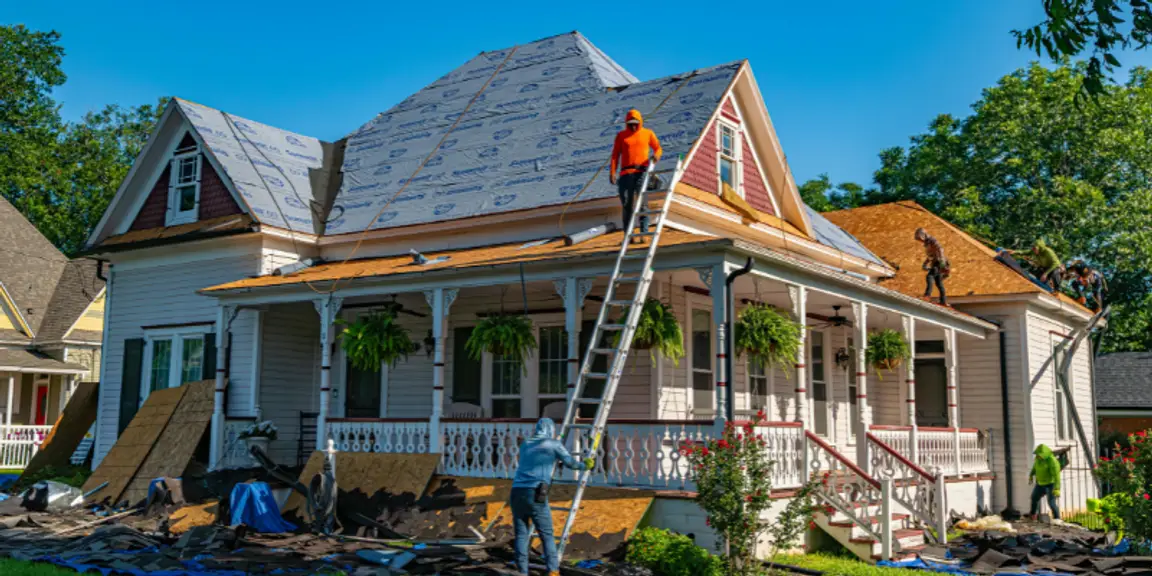

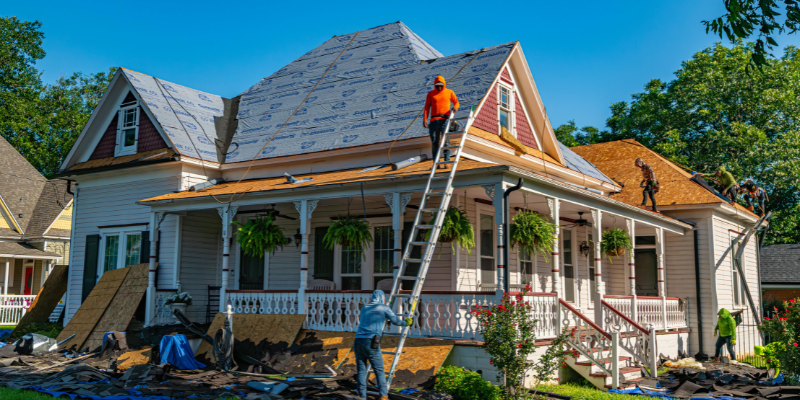
Most sellers agonize over paint colors and staging furniture. Homeowners barely give the roof a thought until the home inspector climbs a ladder and the buyer’s agent starts typing an amendment. By then, the conversation has shifted from “what’s the house worth” to “how much will the seller concede,” and that’s a much worse place to be negotiating from.
Should I Replace My Roof Before Selling My House?
Many sellers assume buyers will negotiate a roof problem into the sale price and move on. What they don’t account for is the buyer pool that disappears entirely. Under HUD Handbook 4000.1, FHA appraisers must flag any roof with fewer than two years of remaining useful life as a repair condition before loan approval. A significant slice of buyers, particularly first-timers relying on FHA financing, can’t close on your house at all without repairs happening first. VA loan minimum property standards follow a substantially similar standard, and either flag results in the lender requiring repair before closing (sometimes weeks before your target date).
Your buyer pool shrinks. Fewer competing buyers mean less pressure on price. Less pressure on price means you leave money on the table, sometimes more than the roof would have cost.
Replacing the roof isn’t automatically the right call. An asphalt shingle roof replacement costs a national average of $31,871 and adds $21,501 in resale value for a 68% recoup rate, according to the 2025 Cost vs. Value Report. You’re spending a dollar to get back about 68 cents in appraised value. So the math only works if the alternative is losing buyers, ruining sales at the inspection table, or having every serious offer come in with a massive repair credit attached (and those credits add up fast).
According to NAR, the national median existing-home price was $431,400 in July 2026. On a home near that figure, a 10% buyer concession on price because of a roof problem costs more than most full replacements. Spending on the roof isn’t really the question; it’s whether spending on it costs you less than not spending on it.
The team at Southern Hills Home Buyers works with sellers every week who are facing exactly this math, and sometimes the answer is to replace it, sometimes it’s don’t, and sometimes it’s sell as-is to someone who doesn’t need it fixed at all. The math looks the same across the Metroplex, whether you’re in Dallas or searching for cash home buyers in Garland.
What Home Buyers and Inspectors Look for in an Aging Roof
Not long ago, I worked with a seller in Garland, Texas, a widow who had quietly been carrying two mortgage payments for nearly a year after her husband passed. The house was structurally solid, but the garage had boxes stacked to the ceiling on a Thursday when we walked through, and the roof was at least 22 years old with visible cupping along the lower courses of shingles. She hadn’t thought much about the roof, which is almost always the case with sellers who’ve lived under one without a single leak. The home inspector the first buyer sent out thought about nothing else.
Home inspectors aren’t just looking at missing shingles. They’re checking the ridge line for sagging, examining flashing around chimneys and vent stacks, probing the decking for soft spots, and evaluating how much wear is showing on the granule layer of asphalt shingles. VA appraisers and most home inspectors working conventional sales are checking for three things: no active leaks, no structural damage, and enough remaining useful life that the home will stay habitable for the foreseeable future.
Missing shingles, water stains in the attic, sagging decking, or a roof that is clearly past its service life will generate a condition on the appraisal that must be cleared before closing. Buyers walk away when those conditions appear, and I’ve watched sales fall apart in the final week because no one wanted to negotiate a repair credit at the eleventh hour.
Many sellers do not realize that the inspector’s report goes to the buyer’s lender, not just the buyer. A note in a report about “end of service life” can trigger an appraisal condition even when the roof technically isn’t leaking yet. If your shingles are curling, if the granules have worn down to bare mat in patches, if the ridge cap is cracking, a home inspector will flag it, and that flag will follow you through every offer you receive.That cuts both ways. Buyers who move in and find damage the report never mentioned sometimes ask whether they can sue a home inspector for missing defects.
What Sellers Are Legally Required to Disclose About Roof Condition
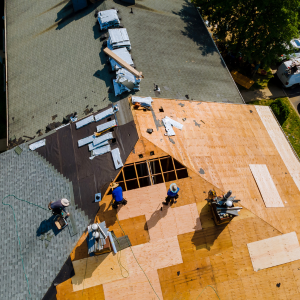
You don’t get to stay quiet about a roof problem and hope no one notices.
In most U.S. states, sellers are legally required to disclose known material defects, including roof damage, on the seller disclosure form. The leak you patched two summers ago, the spot in the ceiling you painted over, the insurance claim you filed after the hailstorm three years back. All of it is typically fair game for disclosure. Real estate disclosure laws vary by state and sometimes by locality, but the general obligation is clear: if you knew about a problem, you tell the buyer (and “I forgot” rarely holds up).
Disclosure requirements usually cover the age and condition of electrical systems, water and sewage systems, HVAC units, appliances, roofs, gutters, and more. Omitting a known roof defect doesn’t protect you; it exposes you to liability after closing.
Sellers sometimes think that selling as-is means they don’t have to disclose anything. That’s wrong. Selling as-is limits the seller’s obligation to make repairs; it doesn’t eliminate the duty to reveal what you know. The distinction matters because a buyer who discovers concealed damage after closing has legal recourse in most states. Disclose accurately, price accordingly, and let the buyer decide.
This is one of the places where talking to a straightforward buyer, like the team at Southern Hills Home Buyers, takes some pressure off. A direct sale doesn’t make your disclosure obligations disappear, but it removes the layer of inspection-driven renegotiation that typically follows.
How a Damaged Roof Affects Your Home Sale Price and Negotiations
Sellers who disclose a bad roof condition and price it into their asking price receive offers 10 to 20% below comparable homes in good condition, because buyers are pricing in the full replacement cost plus a risk premium for managing the work themselves. On a $350,000 home, that’s a $35,000 to $70,000 discount before any negotiation even starts.
The national median days on market reached 55 days as of March 2026, according to Redfin data, up from 48 days in March 2025. Every extra week a house sits increases the chance of a price reduction. A damaged roof gives buyers justification to wait, negotiate harder, or simply move to the next listing. In a market where buyers already have more options and more time to think, you don’t want to hand them an obvious leverage point.
Visible damage, missing shingles, or active leaks regularly trigger appraisal callouts, inspection-driven price cuts, or financing denials, especially on FHA and VA loans. Even buyers using conventional financing will use a flagged roof to renegotiate. The number they ask for usually exceeds what a repair or replacement would actually cost, because they’re building in a cushion for surprises they assume you’ve been hiding.
Do you want to spend weeks renegotiating under contract, watching sales fall apart while your house sits, or would you rather solve the problem before you list?
Sellers who replace a roof before listing can realistically ask 1 to 3% more for their home; on a $400,000 house, that translates to $4,000 to $12,000 in additional asking price. This is before accounting for fewer concessions and a faster close, which, in my experience, matters just as much as the number on the listing.
Roof Repair Vs. Full Replacement: Which Option Makes Financial Sense
For years, I defaulted to telling sellers to just replace the roof if it was over 20 years old. That was lazy advice.
The real question is what condition the existing roof is actually in, not just how old it is. Replacing before listing makes the most sense when the roof is at or past the end of its useful life for standard asphalt shingles, but for a roof with five or more years of life remaining, offering a credit at closing is often the smarter play.
A targeted repair, patching a problem section, replacing flashing, fixing a few squares of damaged shingles, can run a fraction of a full replacement and may be enough to satisfy an inspector and keep your buyer pool intact. A failing roof can cost $5,000 to $15,000 or more in interior damage, including drywall, insulation, mold remediation, and sometimes flooring. Replacing on your schedule, before a buyer’s inspector documents those secondary consequences, keeps the scope of the problem defined and gives you leverage in negotiations.
One thing roofing contractors sometimes don’t advertise: partial replacement has trade-offs. Color matching is difficult, even with the same brand, and some manufacturers offer reduced or no warranty coverage on patchwork jobs. A buyer’s inspector may still flag a mismatched patchwork roof as a concern, even if it’s structurally sound. So repair works best when it’s genuinely comprehensive, not cosmetic.
Full replacement gives you the cleanest story to tell buyers. A transferable warranty and a documented install date take the roof completely off the negotiation table.
What Roofing Materials Add the Most Resale Value to Your Home
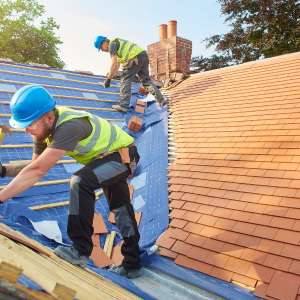
Sitting at someone’s kitchen table, here’s what I say: pick the material your neighborhood expects, not the one the roofing contractor is pushing hardest.
Asphalt architectural shingles serve as the baseline for most markets. They’re what buyers assume when they buy a house, and deviating from that expectation doesn’t automatically yield a better price. Metal roofing performs well in areas where durability is a selling point, particularly in storm-prone regions, but the upfront cost is steep. Metal roofing averages a replacement cost of around $51,865 and adds $25,972 in resale value, a 50% recoup rate, according to that same 2025 report. It’s a worse return than asphalt shingles in pure dollar-back terms, even though metal lasts longer, and I’ve watched sellers learn that the hard way after betting on premium materials.
Premium installs with system warranties often perform slightly better than regional averages because the transferable warranty adds appraisal credibility, though the return percentage is generally lower than sellers hope, and the soft benefits, fewer concessions, and a faster sale often close the gap.
Here in North Texas, architectural asphalt shingles are what buyers expect to see on almost every street. A full asphalt replacement on a typical 2,000-square-foot Dallas Fort Worth home runs about $8,500 to $15,000 in 2026, and Class 4 impact-resistant shingles add a bit on top of that. Standing seam metal jumps to roughly $16,000 to $30,000 across Texas, so sellers often get a rude awakening when they start collecting estimates.
Homeowner’s insurance is another cost sellers tend to overlook. Some carriers offer lower premiums for impact-resistant shingles, and a documented new roof can sometimes open up coverage options that weren’t available on an aging roof. This detail is worth mentioning to your buyer because it’s a real benefit they’re inheriting.
How to Decide What to Do with Your Roof Before Listing
The thought about material choice connects directly to the bigger decision: spend now, credit later, or sell as-is.
Three factors should drive the choice. First, how much life does the roof have left? Get a roofer out for an honest assessment before committing to anything. Second, who are your likely buyers? A neighborhood full of FHA and VA buyers leaves you little room to dodge the issue. Third, what is the repair or replacement cost versus what you’d likely concede in negotiation?
Buyers demand credits of $15,000 to $30,000 for aged roofs, a demand that can exceed the actual replacement cost. So if your roof is clearly at the end of its life, replacing it proactively usually pencils out better than absorbing that negotiated haircut, which I’ve seen kill more than one sale at the finish line.
A landlord I worked with in Arlington had a rental property she never wanted in the first place, an inherited duplex with a flat roof over the back unit that was clearly done. She’d spent two years chasing rent and fixing slow leaks, and by the time she called us on a rainy Monday, she just wanted out. The garage still had the previous tenant’s furniture in it. She hadn’t touched the place in months. For her, replacing the roof to list with an agent would have meant months of coordination, contractor delays, permits, and carrying costs while the house sat. Selling directly to a local buyer, someone who could take the property as-is and close on her timeline, made more sense (flat roofs complicate traditional listings fast). That’s a real option, not a last resort.
If that path interests you, Southern Hills Home Buyers buys houses in as-is condition, roof and all, so you’re not forced to solve a problem before you can move on. We buy houses in Arlington, Fort Worth, and the rest of the Metroplex on the same terms.
Frequently Asked Questions
What Should I Not Fix Before Selling My House?
Skip repairs that won’t return their cost or that buyers won’t notice. Cosmetic upgrades like full kitchen remodels, new flooring throughout, or premium light fixtures rarely recoup their full outlay in a sale. Your money and energy are better spent on things that remove deal-killing flags, like a failing roof, plumbing leaks, or electrical hazards, rather than on aesthetic upgrades that buyers will simply personalize anyway.
Does a 20-year-old Roof Need to Be Replaced Before Selling?
Not automatically, but age alone puts you in a gray zone. Asphalt shingles typically last 20 to 30 years, so a 20-year-old roof may have meaningful life remaining, or it may be on borrowed time depending on installation quality, climate, and maintenance history. Have a licensed roofer assess it before you list. If it still passes inspection standards and shows no active issues, you may be able to disclose the age and price accordingly and move forward without a full replacement.
How Much Does It Cost to Replace a Roof on a 2,000-Square-Foot House in Texas?
A new asphalt shingle roof on a 2,000-square-foot Texas home typically runs $8,000 to $15,000 in 2026. In Dallas Fort Worth, most jobs land around $12,500 to $15,000 once tear-off, underlayment, permits, and disposal are counted. Standing seam metal costs more, roughly $16,000 to $30,000. Hail is the wild card in North Texas, so check your policy before you plan to cover the whole thing yourself. Get at least two written estimates from licensed roofing contractors before you budget.
What Is the 25% Rule for Roofing?
Many local building codes require a full tear-off and replacement if more than 25% of a roof’s surface area is being replaced at once. The rule is designed to prevent layering issues and to bring the entire roof up to current code during major repairs. This matters for sellers because a small repair can trigger a much larger scope of work and cost, depending on your local jurisdiction. Your roofing contractor should flag this risk before you commit to a partial fix.
If you’re staring at a roof problem and trying to figure out whether to fix it, credit it, or just sell the house as-is, we’re happy to talk through it with you. No pitch, no pressure, just a real conversation about what makes sense for your situation. Reach out to Southern Hills Home Buyers whenever you’re ready.