

A tax bill you can’t cover feels like quicksand. Wait longer and you sink deeper. Most homeowners never learn they have real options until the clock has nearly run out on them.
Texas doesn’t wait politely. Property taxes are due by January 31, and on February 1 any unpaid balance turns officially delinquent and starts collecting penalties and interest every single month. Nobody tells you the useful part, though. Selling your house before a tax foreclosure closes is entirely possible, and most sellers walk away with money in their pocket. Where you go next depends on knowing exactly where you stand today (title search first, always).
What Happens When Property Taxes Go Delinquent in Texas
One seller I worked with had owned a small brick house in Garland for over twenty years. Her husband had always handled the bills. After he passed, three years of property taxes sat unnoticed in a stack of mail on the kitchen counter. More arrived every week and joined the pile. She called me on a Thursday afternoon. By then the county had handed the account to an attorney’s office, and the fees had grown well past the original tax balance.
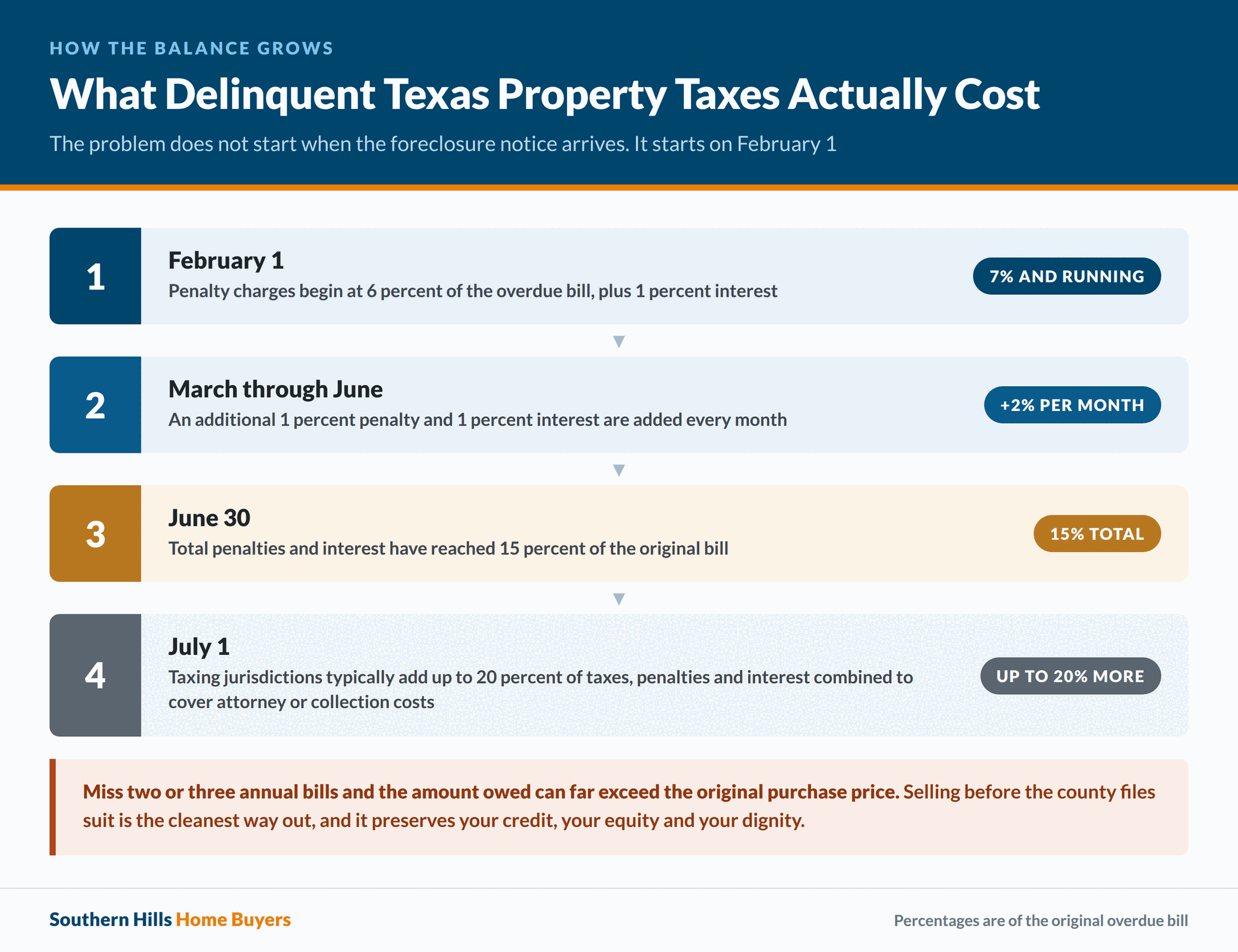
Trouble doesn’t start when the foreclosure notice lands. It started quietly, on February 1 of the first year the bill went unpaid. Penalty charges open at 6 percent of the overdue bill plus 1 percent interest in February. Each month through June adds another 1 percent penalty and 1 percent interest, so total penalties and interest reach 15 percent of the original bill by June 30. Then July 1 arrives and it gets worse. Taxing jurisdictions typically tack on an extra penalty of up to 20 percent of taxes, penalties, and interest combined. That one covers attorney or collection costs on accounts that went delinquent before May 1 and stayed unpaid through July.
Miss two or three annual bills and the number owed can far exceed the original purchase price. Selling before the county files suit is the cleanest way out. It protects your credit, whatever equity is left, and your dignity.
How the Texas Tax Deed System Works Vs. Tax Lien States
People ask me whether Texas investors can simply “buy the lien” and collect interest, the way investors do in some other states. Texas doesn’t work that way. Texas is a tax deed state. The government sues to foreclose, wins a judgment, then sells the property outright at a public auction called a tax deed sale. No separate lien certificate trades hands here. Unpaid amounts, interest and penalties included, become a lien on the property. That lien attaches on January 1 of the tax year, before you’ve seen a single bill and before any assessment or billing happens at all.
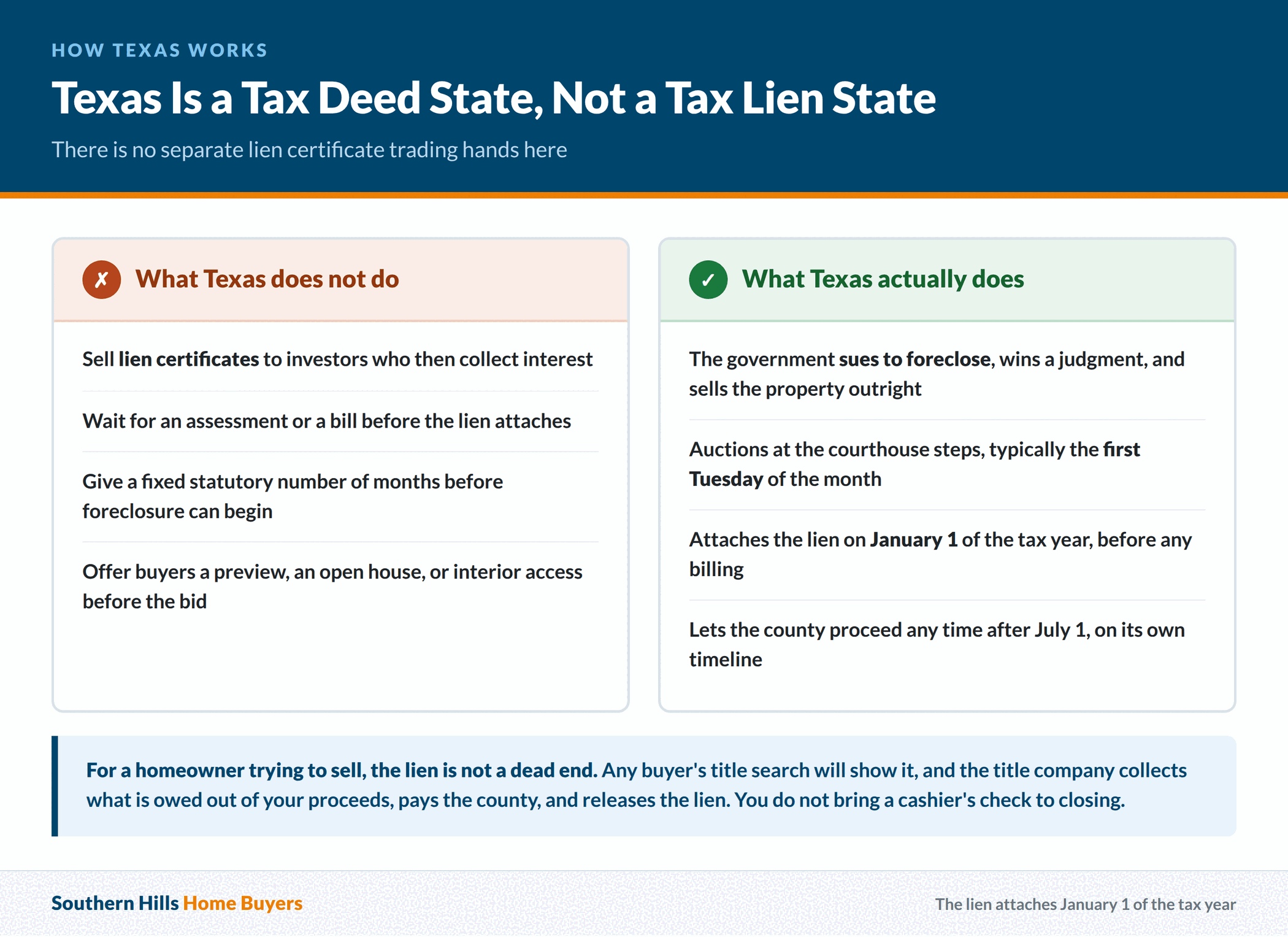
For a homeowner trying to sell, that lien shows up on the title search no matter who the buyer is, a traditional buyer with a mortgage or a cash investor. It has to clear at or before closing. Your title company collects what’s owed out of your proceeds, pays the county, and releases the lien. You won’t need to bring a cashier’s check to the closing table, since the payoff comes out of the sale price. Southern Hills Home Buyers handles this exact scenario week in and week out, and can walk you through your payoff before you sign anything.
Early last year I bought a property in Waxahachie where three siblings had inherited their mother’s home. A contractor gave them an estimate that ran higher than the kitchen was worth, for a renovation they hoped would lift the sale price. Meanwhile two years of tax bills sat ignored, on the assumption that sale proceeds would cover everything. Nobody had told them the clock was running. The sellers turned out to be right. That only held because they sold fast enough that the penalty stack hadn’t eaten a third of their equity yet. We reached the closing table in time.
When and Where Texas Property Tax Sales Take Place
I used to assume a county filing suit gave a homeowner months of breathing room. That’s not always true. Speed is the whole game. Once an account moves to collections, a homeowner can get a foreclosure notice with only 21 days to respond before the property is auctioned at a tax sale. Texas law sets no fixed number of months before foreclosure proceedings start. The county is eligible to move any time after July 1, and the timeline varies by county, with some acting within months and others waiting years. I’ve watched both extremes play out on the same street.
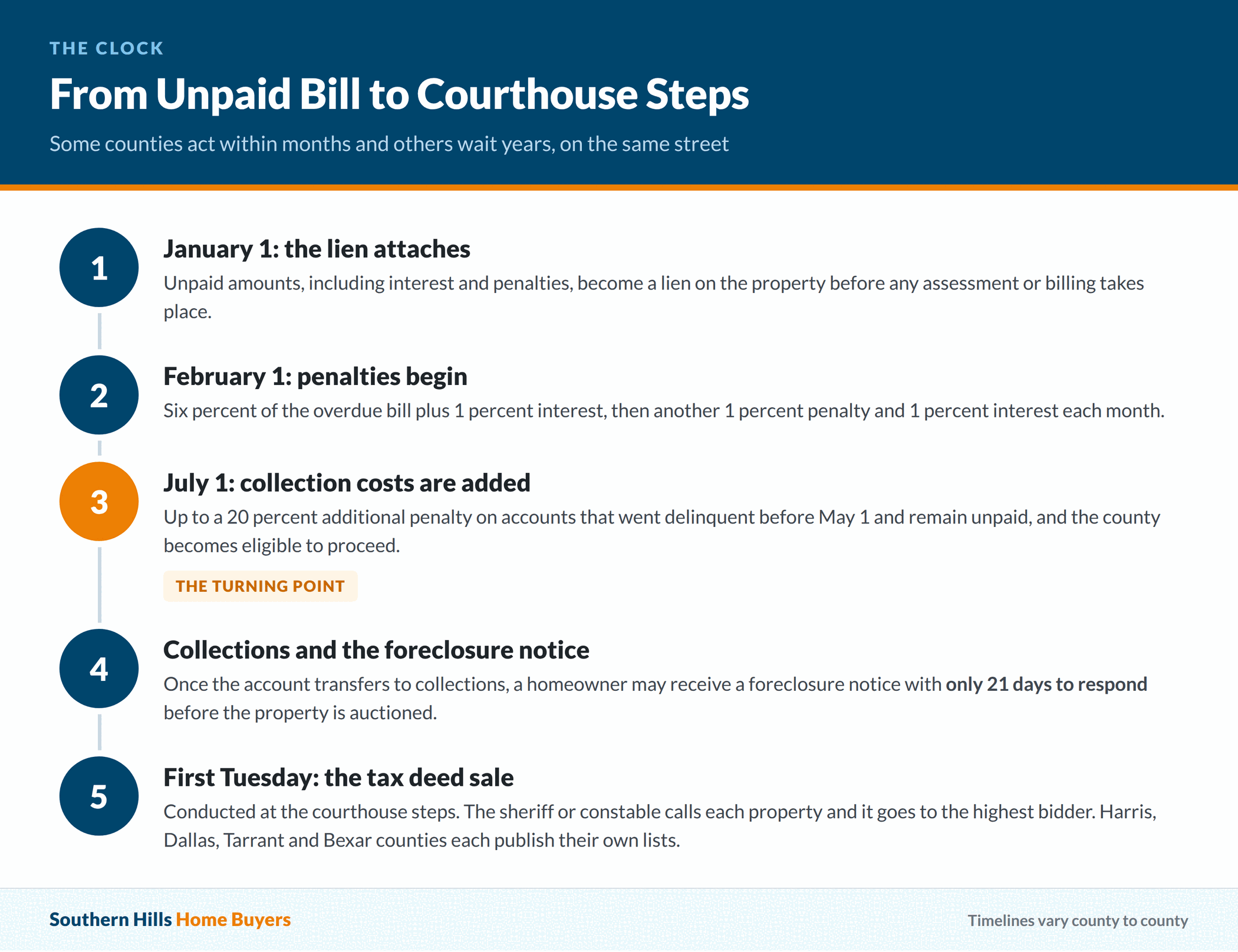
Tax deed auctions in Texas happen on the courthouse steps, usually the first Tuesday of the month. Counties run their own sales on their own schedules. Dallas County, Tarrant County, Collin County and Bexar County each publish upcoming sale lists separately. Bidders gather, the sheriff or constable calls out each property, and it goes to the highest bidder. No preview, no open house, and usually no interior access before you bid. I’ve bought blind more than once.
How the Texas Tax Sale List and Its Costs Work
Getting the list is easier than most people expect. Acting on it in time is the real challenge.
Each county posts its delinquent property tax sale list through the county clerk’s office, or through the attorney handling collections for the taxing jurisdiction. The Texas Comptroller’s Property Tax Assistance Division keeps resources that point you toward your own county’s process. Some counties charge a small fee for the list. Others post it online for free. The list keeps moving, though. Properties get redeemed or settled, and the final auction roster often looks nothing like the version published two weeks earlier, which is why I pull it again the morning of the sale.
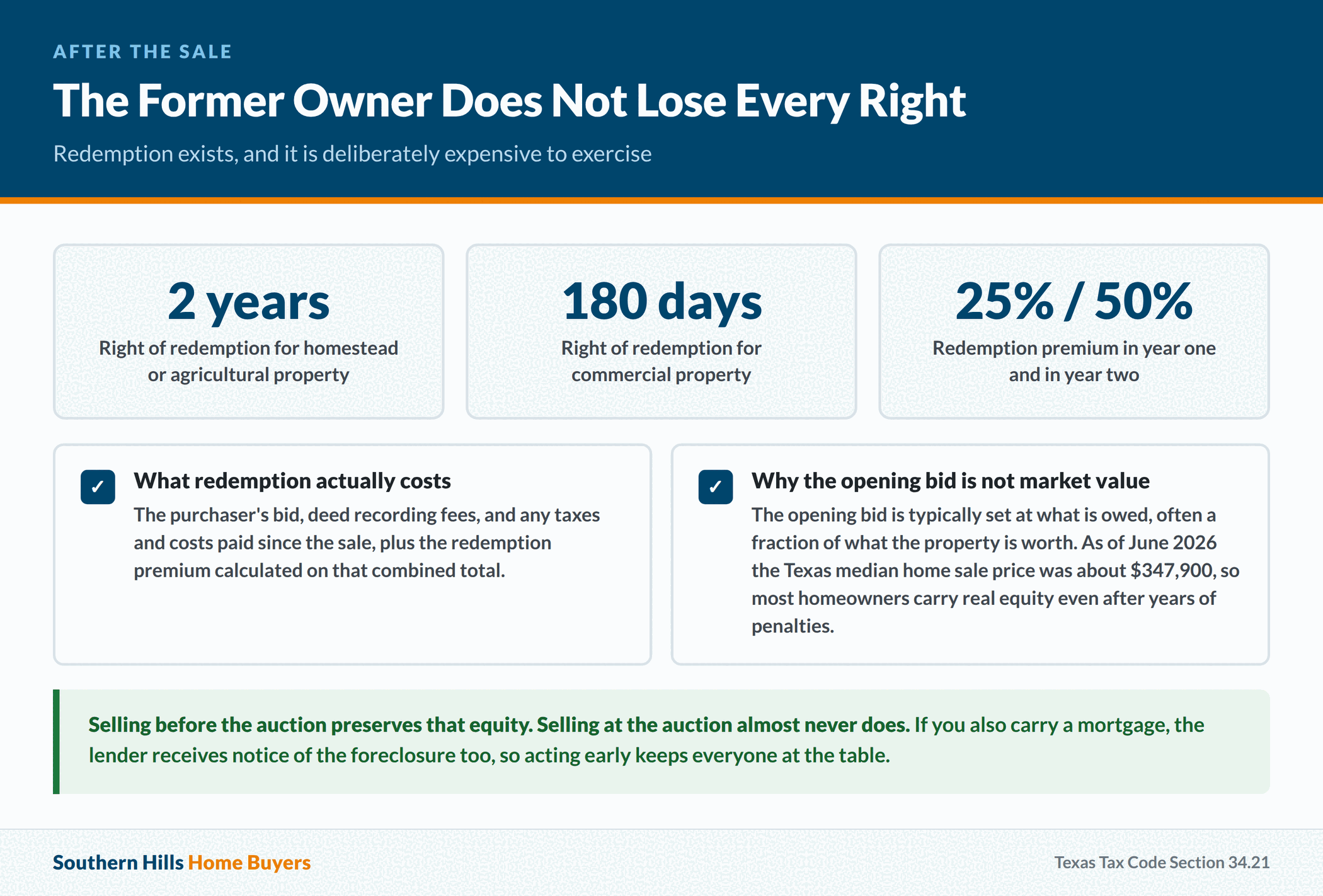
That churn matters because it shows how many other distressed sellers sit in the queue alongside you. As of June 2026, the Texas median home sale price sat at approximately $347,900, which means most homeowners carry genuine equity even after years of accrued penalties. Selling before the auction protects that equity. Selling at the auction almost never does, because the opening bid usually gets set at what’s owed, often a fraction of market value, rather than what the property is worth.
How to Find and Evaluate Properties Before the Tax Sale
Median days on market for Texas homes in June 2026 was 69 days. Even in a slower market, homes are still moving. Demand is thinner but it’s there. For a distressed seller carrying a lien, that 69-day window matters. It’s long enough to list, accept an offer, and close ahead of a pending foreclosure date, as long as the seller moves the moment they realize what’s happening.
Start by evaluating the spread between what the property would sell for and what’s actually owed. That includes penalties, interest, attorney fees, and any second liens or federal tax liens that attached along the way. Federal tax liens survive a county tax sale in some situations, so skipping that detail is expensive. Your county appraisal district’s website shows the assessed value. Your county tax office shows the delinquent balance. Subtract one from the other and you’ve got a rough equity number to work with.
Investors who buy at auction run different math. They want properties where the bid plus holding costs still leaves room for profit after resale. That math almost always means paying under market value. Their spreadsheet has no room for sentiment. Which is another reason selling directly, before the auction, leaves more money in your pocket.
How to Buy Property at a Texas Tax Sale Step by Step
Showing up at the courthouse steps with cash in hand isn’t the same as being prepared. Registered bidders have to bring a cashier’s check or certified funds. Most counties want bidders registered before the sale begins. Rules shift from one county to the next, whether you’re bidding in Plano or out past Denton, so call your county’s tax attorney or the sheriff’s office directly before the sale date.
The winning bidder receives a sheriff’s deed or a constable’s deed, not a general warranty deed. That distinction matters to buyers. A tax deed conveys the property without guaranteeing clean title, which is why seasoned investors run a title search beforehand and budget for quiet title actions afterward. The deed gets filed with the county clerk, and that filing date starts the clock on the redemption period.
For homeowners still holding the property, that gavel is the moment selling privately stops being an option. After it falls, choices narrow fast. I’ve watched it happen from the back of the crowd.
Key Facts Every Buyer Must Know Before Bidding in Texas
One detail gets glossed over constantly: the former owner doesn’t lose every right the second the deed is recorded. A former owner of homestead or agricultural property keeps a two-year right of redemption after a tax sale, and commercial property owners get 180 days. Under Texas Tax Code Section 34.21, redeeming inside the first year of that two-year window means paying the purchaser’s bid, deed recording fees, and any taxes and costs paid since the sale. Add a 25 percent redemption premium on the combined total. Redeem in the second year and that premium climbs to 50 percent.
An investor who wins the bid and drops $40,000 into renovations right away takes a real risk during a two-year redemption window. A former owner who redeems the property owes the investor the bid and the taxes paid. Renovation costs beyond basic maintenance may not be fully recoverable. Hiring a real estate attorney who handles Texas tax deed matters isn’t optional for serious buyers. It’s part of the cost of doing business, and I’d budget for that consultation before I ever set foot at the auction.
Homeowners behind on taxes who also carry a mortgage should know the lender gets notice of any foreclosure proceedings too. Our guide on stopping a foreclosure once it starts in Texas covers that side of it. Selling before the lender or the county acts keeps everybody at the table, and it leaves you deciding the terms instead of a courthouse deciding them for you.
I worked with a family in Mesquite caring for a parent who had moved into assisted living that previous winter. The house sat empty for months. The garage was still full of tools and lawn equipment nobody had gotten around to sorting. Two bills were delinquent. Foreclosure wasn’t imminent, but the next July 1 collection penalty sat weeks away. We made them a cash offer, coordinated the lien payoff through the title company, and closed before that deadline hit. What was left over covered the first few months at the care facility, and assisted living is not cheap. That’s what selling early does. It turns a shrinking asset into actual cash right when a family needs it.
If your situation looks similar and you want your options laid out, Southern Hills Home Buyers works directly with homeowners carrying delinquent taxes across Texas. You’ll get a straight answer about what your property is worth net of what you owe.
Frequently Asked Questions
Can You Take Ownership of a Property by Paying Back Taxes in Texas?
Paying someone else’s delinquent taxes does not transfer ownership to you in Texas. That surprises people every time. Property ownership changes only through a formal tax deed sale run by the county after a successful foreclosure lawsuit. Pay back taxes on a property you don’t own and you may have a claim for reimbursement, but no deed comes your way. Your county clerk’s office can explain the exact process for your county.
What Happens If You Buy a House That Has Delinquent Taxes?
Buy a house through a standard sale and any delinquent property taxes owed usually get paid off at closing from the seller’s proceeds, so you take title free of that lien. Buy at a tax deed auction instead and you receive the property subject to the redemption period. Verify whether any federal tax liens or other encumbrances survived the sale. Working with a title company and a real estate attorney before closing protects you either way.
How Many Years Behind on Property Taxes Before Foreclosure in Texas?
Texas law sets no fixed number of months before foreclosure can begin. Counties are eligible to start proceedings any time after July 1 following the delinquency. Practically speaking, one year behind puts you in real jeopardy. Some counties move within a few months. Others take much longer. The penalty and interest clock runs the whole time regardless, so waiting to see how long your county takes is a costly gamble.
How Long Can You Be Delinquent on Property Taxes in Texas?
Taxes are treated as delinquent if they aren’t paid before February 1 of the year following assessment and billing, per Texas Tax Code Section 31.02. From that date on, penalties and interest accrue monthly, an attorney collection fee can land as early as July 1, and the county can file suit. No safe harbor period exists. The Texas Comptroller’s penalty and interest chart shows exactly how much accrues each month, so you can calculate what you’d owe before deciding anything.
If you’re sitting on a house with unpaid taxes and you’re not sure what comes next, reach out to Southern Hills Home Buyers. No pressure, no obligation. Bring the notice with you. Just a real conversation about what your house is worth, what the tax payoff looks like, and what your options actually are. Most sellers feel better once they know the numbers.
Selling a House With Back Taxes in the Dallas-Fort Worth Metroplex
As the homeowner rather than the bidder, the Metroplex numbers are the ones that matter to you. As of July 2026 the median listing price across the Dallas-Fort Worth-Arlington metro was about $439,000, with a median of roughly 54 days on market, according to Federal Reserve Economic Data. Set that against an opening bid that’s typically just what you owe. From Rockwall to Fort Worth, the gap between selling before the auction and losing the house at it usually runs six figures.
We buy houses with delinquent taxes across the Metroplex and pay the county out of closing proceeds, so nothing comes out of your pocket. If the property sits inside the city limits, we’re the cash home buyers in Dallas who handle back-tax payoffs routinely. We also buy in Frisco, Denton, Garland, Grand Prairie and Irving.
Behind on Taxes? Find Out What Your Payoff Actually Looks Like
Most homeowners in this spot have never seen the real number, only the one printed on the notice. We can walk you through what the county is owed, what the title company would collect at closing, and what would be left for you, before you commit to anything. Southern Hills Home Buyers has closed on houses across the Dallas-Fort Worth Metroplex, from Irving out to Rockwall. Some carried three and four years of back taxes, attorney fees already added, and a sale date on the calendar. Nothing about that is unusual. No pressure and no obligation. You can also read other frequent questions here.
Ready to start? Reach out to Southern Hills Home Buyers or fill out the form below, and we’ll get back to you with a straight answer, usually the same day. We answer every one.
Get Cash For Your House In Texas
Just Fill Out This Quick Form And Get A CASH Offer Today