


Most sellers I sit down with have no idea an appraisal and an inspection are two separate things. They find out once they’re already under contract and the invoices start landing. By then they’re scrambling to work out who owes what, and whether they’ve negotiated themselves into a corner. Sorting this out before you sign saves real money and a pile of aggravation. It also keeps the closing timeline from blowing up at the worst possible moment.
Who Pays for the Appraisal and Inspection in a Texas Sale?
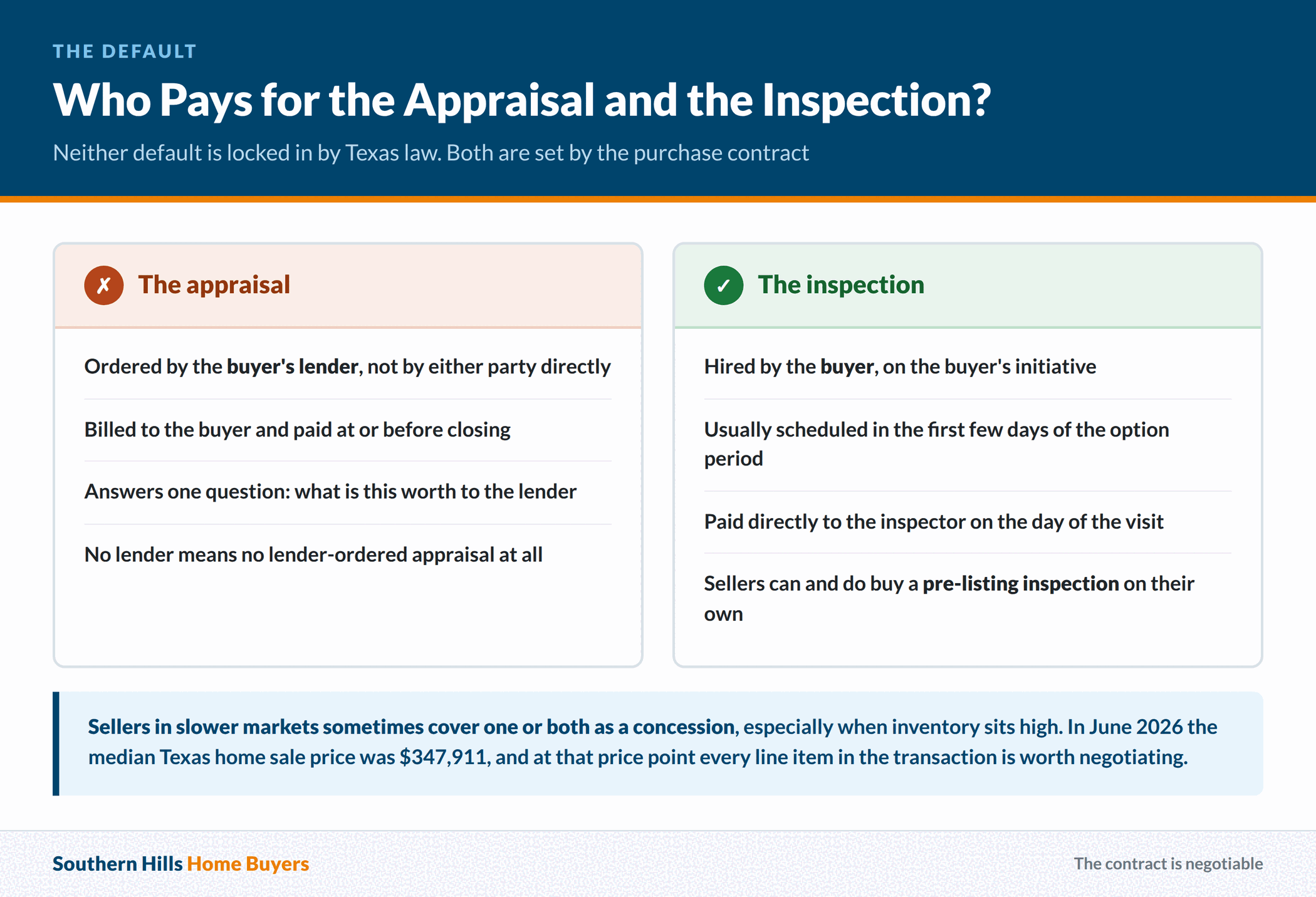
In June 2026 the median home sale price in Texas sat at $347,911, and at that number every line item in a transaction earns a second look. Our breakdown of attorney fees and closing costs in Texas is worth reading alongside this one. Buyers and sellers tend to assume these charges are fixed, handed down by some invisible rule. They aren’t. Responsibility for the appraisal and the inspection is set by the purchase contract, and that contract is negotiable from the first draft.
Default practice puts both bills on the buyer, and most sellers never think to ask why. The lender orders the appraisal, bills the buyer for it, and collects at or before closing. An inspection is hired by the buyer, usually booked within the first few days of the option period. The inspector gets paid directly on the day of the visit. Neither default is written into Texas law. Sellers in slower markets, or those trying to speed things along, sometimes offer to cover one cost or both as a concession. That happens more often when inventory sits high.
Early last year I bought a property from an heir in Mesquite who was splitting assets in a divorce and had no appetite for a drawn-out listing. The property had sat unsold for three weeks before she called me. By the end, the family had paid nothing in inspection or appraisal fees. The structure of the transaction made those costs mine to carry, which heirs rarely expect when they first call. Traditional financing seldom offers that kind of room.
If every single dollar at closing counts for you, Southern Hills Home Buyers is worth a conversation. They buy houses directly, which takes the appraisal and the lender-required inspection out of the picture.
What Does a Home Appraisal Cover in Texas Real Estate?
Pushback shows up from sellers who suspect the appraisal serves nobody but the bank. That objection is fair, and it’s mostly right, though not for the reason most people give. A lender orders the appraisal, a licensed appraiser carries it out, and the point is to confirm the property is worth at least what the loan covers. The bank protects the bank. Whatever number comes back, the seller lives with it.
A licensed appraiser walks the property, photographs it, measures square footage, notes condition and features, then lines it up against recent comparable sales nearby. In parts of Plano and Frisco, or out across the older streets of Fort Worth, comps come from very different price bands. It depends on the block. Appraisers send the lender a written report with their opinion of market value, usually with a page or two of supporting comps. That figure either supports the sale price or it doesn’t, and when it doesn’t, nobody stays calm for long.
From the appraiser’s site visit to the finished report, the process usually takes 7 to 10 business days. That window eats into your closing timeline, so a seller already fighting a deadline feels it most. Some owners lean on their agent to rush the appraisal along. Appraisers aren’t obligated to move faster without a rush fee attached, and those fees add extra cost on a rural or oversized property.
Who Conducts Home Inspections in Texas and What Do They Assess?
Skip the home inspection on a Texas property and you can inherit problems nobody warned you about. Inspections here typically run between $340 and $461, and skipping one can expose a buyer to as much as $18,000 in hidden repair costs. Sellers who choose not to disclose known defects take on legal exposure. Buyers who waive the inspection to make an offer more attractive take on something worse, an expensive surprise after the keys change hands.
Texas regulates inspector licensing tightly through the Texas Real Estate Commission (TREC), which makes sure inspectors have the training, education and field experience to work on their own. Three license tiers exist: Apprentice Inspector, Real Estate Inspector and Professional Real Estate Inspector. The top tier demands the most coursework and the most hours in the field. You can verify any inspector’s credentials directly at TREC’s license lookup at trec.texas.gov.
A licensed home inspector checks the roof, foundation, HVAC systems, plumbing, electrical and any sign of water getting in. Mold, asbestos and lead paint fall outside the standard scope in Texas, and each one needs a specialty test running $150 to $400. On an older home, or one sitting in a flood-prone pocket of Arlington, those add-ons are usually worth it for a buyer.
How Is a Home Inspection Different From an Appraisal in Texas?
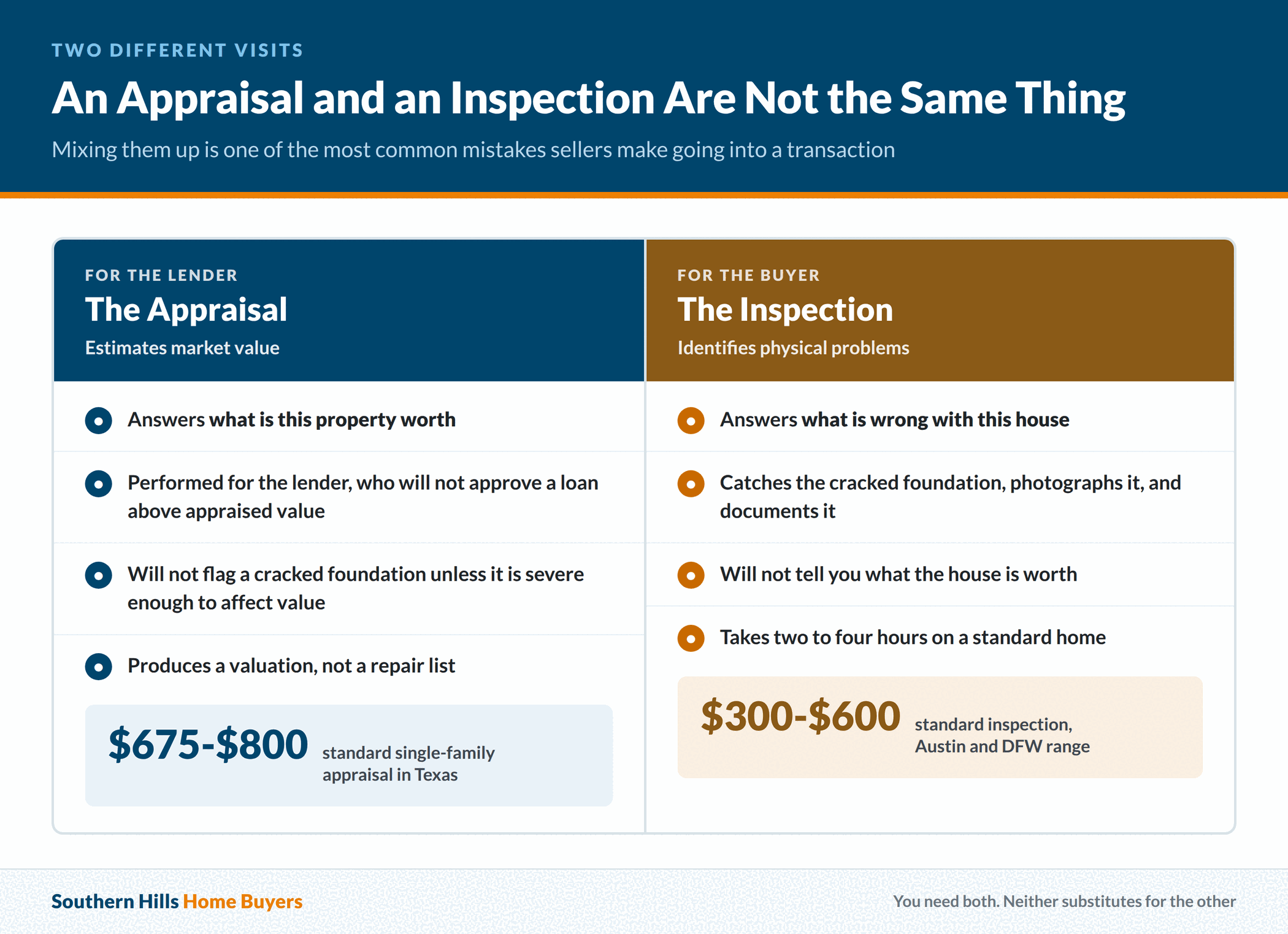
Are these just different words for the same visit? No, and confusing them is one of the most common and most expensive mistakes sellers make heading into a transaction.
An appraisal estimates market value for the lender and nobody else. An inspection finds physical problems for the buyer. Each answers a different question for a different person. A cracked foundation won’t get flagged by an appraiser unless the damage is severe enough to move the value. An inspector catches it, photographs it and writes it up, then says nothing at all about what the house is worth. The two use different methods and produce different documents.
One point gets glossed over almost everywhere. A low appraisal tells you nothing about what’s wrong with the house, and a clean inspection report won’t convince a bank to lend against it. You need both, and neither stands in for the other. Sellers who expect a glowing inspection to fix an appraisal gap are setting up a rough finish for themselves.
What Is the Typical Cost of an Appraisal and Inspection in Texas?
A seller called me a few years back after her buyer’s financing fell apart at the appraisal stage. She had already spent $400 on a pre-listing inspection for her Rockwall ranch house, found nothing serious wrong with it, and assumed the appraisal would be a formality. It wasn’t.
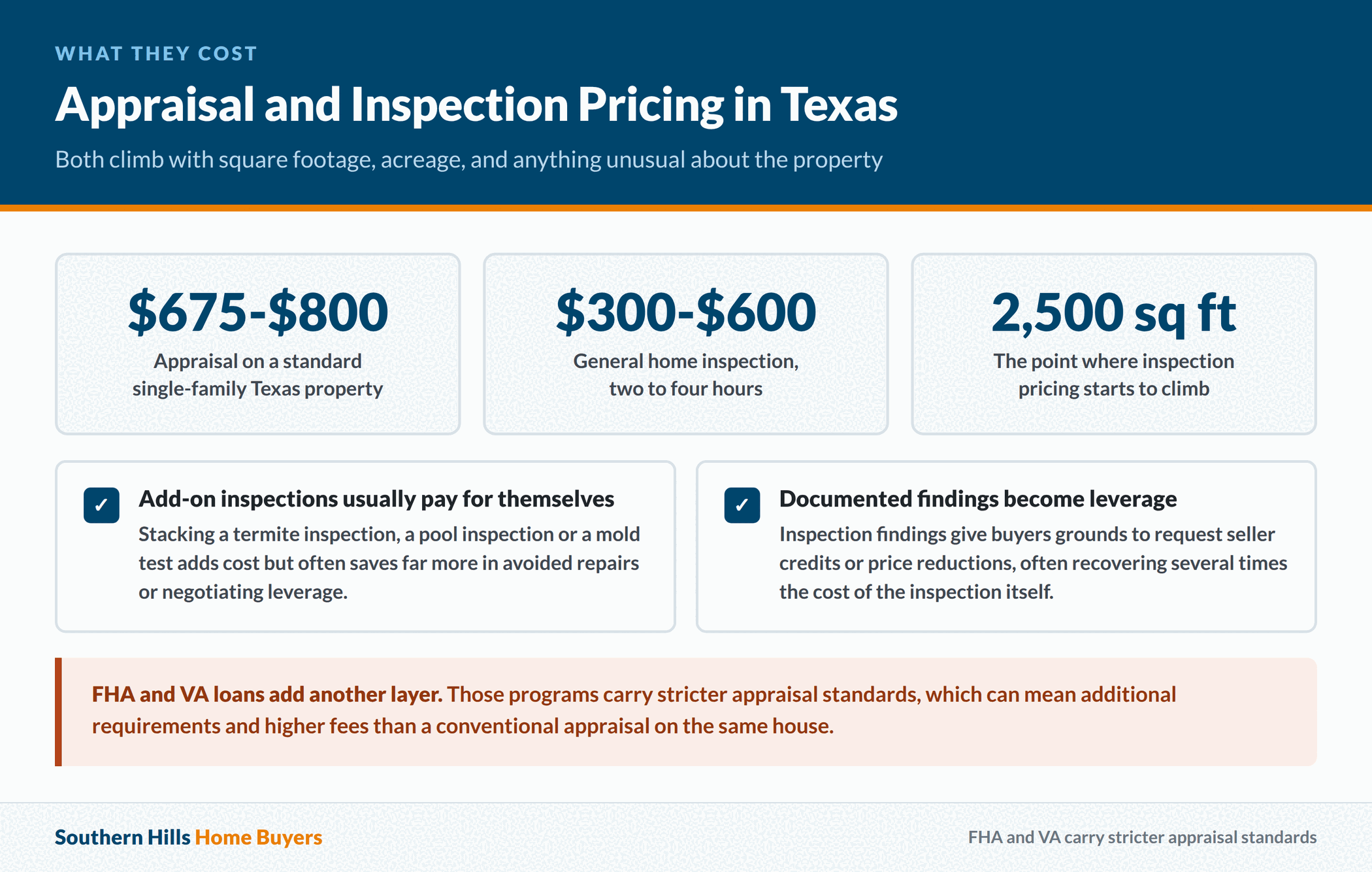
Expect a home appraisal in Texas to run between $675 and $800 on a standard single-family property. That number climbs for larger homes, rural acreage or unusual features. FHA and VA loans add a layer of their own, since those programs carry stricter appraisal standards, extra requirements and higher fees for the buyer.
Home inspections come in lower. In Austin a standard inspection costs $300 to $600, takes two to four hours, and prices climb once a home passes 2,500 square feet. Across the DFW suburbs, from Denton south to Waxahachie, pricing lands in the same range. Stacking a termite inspection, a pool inspection or a mold test on top of the general inspection adds cost. It often saves far more in avoided repairs or negotiating leverage. Documented inspection findings give buyers grounds to ask for seller credits or a price reduction, often recovering several times what the inspection cost.
What Happens When Appraisal Issues Arise in a Texas Home Sale?
Everyone expects the appraisal to confirm the contract price and keep things moving. When it lands low, the transaction hits a wall almost right away. No lender approves a loan above the appraised value, so somebody has to find a way to close the gap.
The seller can cut the price to match the appraisal, or the buyer can cover the difference out of pocket. Splitting the gap works too. Sometimes the whole thing collapses. None of those routes are clean, and each one forces a renegotiation days before closing, when both sides are already committed emotionally and financially. Statewide, average days on market in Texas climbed to 67 days in 2025. A seller who loses a buyer to an appraisal gap pays in time as well as money. Relisting from scratch means rebuilding all that momentum with the next buyer.
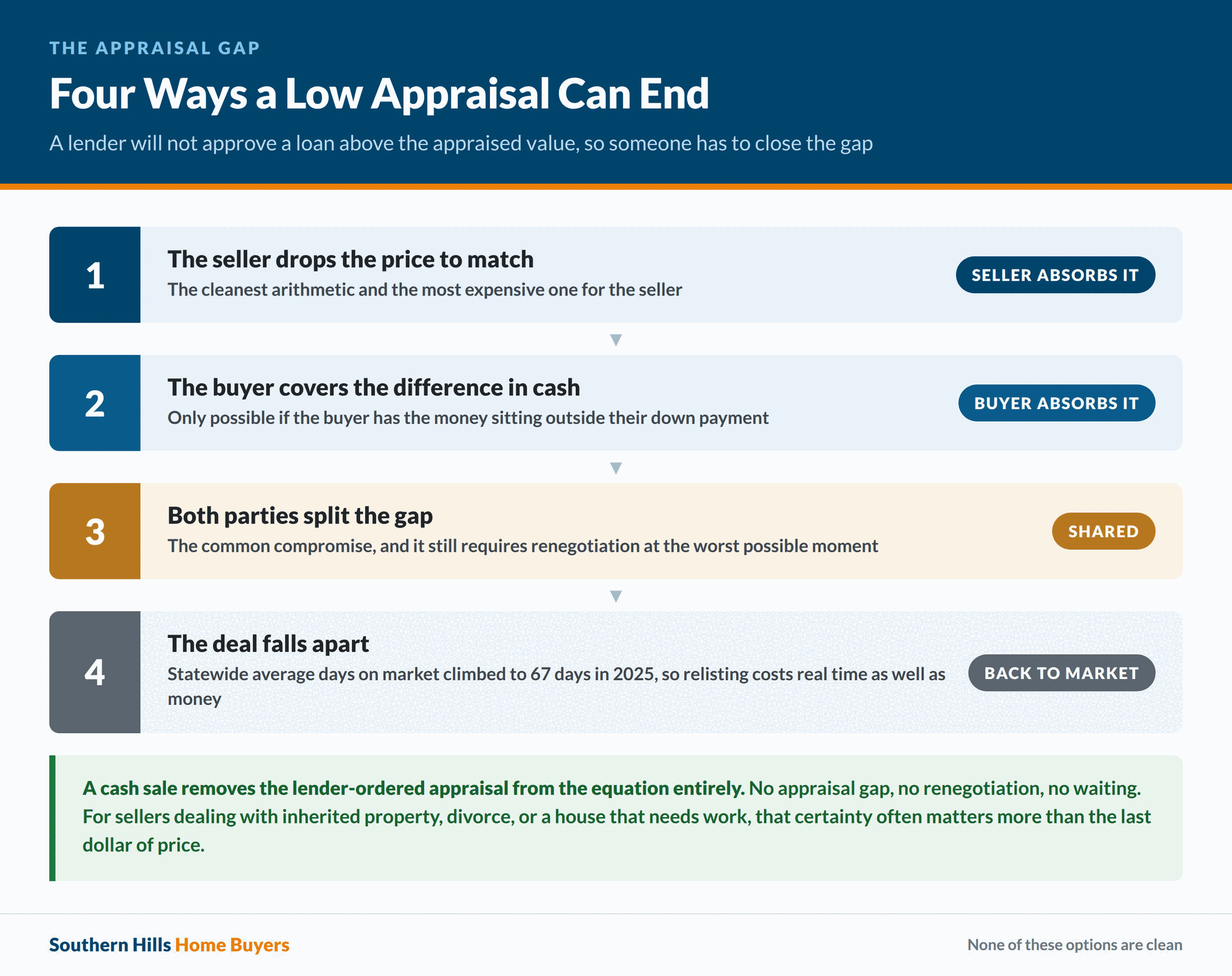
Sellers who want to skip all of that do have a route. A direct sale to a cash buyer like Southern Hills Home Buyers takes the lender-ordered appraisal out of the equation. No gap, no renegotiation, nobody starting over. For anyone handling inherited properties, a divorce, or a house that needs work, that certainty often beats squeezing out the last dollar of sale price.
Tips for Buyers and Sellers on Appraisal and Inspection Costs in Texas
Paying the cost of a pre-listing inspection almost always puts a seller ahead, even though nobody expects it.
Knowing what an inspector will find before buyers start poking around the house gives you options. Fix what’s cheap to fix, price around what isn’t, and disclose what you know. Going in blind produces far more contract cancellations than most sellers imagine. A seller in the Fort Worth suburb of Keller watched two straight agent listings expire without a single accepted offer. Both times buyers backed out after the inspection turned up deferred maintenance she had never touched. On the third try she handled the visible items before listing, trimmed the asking price to reflect what remained, and closed in under three weeks.
The statewide median sale price in Texas landed at $335,000 in 2025, down 1.2% from the year before. That hands buyers more negotiating room than they had two or three years ago. Inspection findings carry more weight in that kind of market. Buyers treat every line of the inspection report as leverage. Walk into a negotiation without knowing what’s in your own house and you’re handing over ammunition. That surprise almost always costs more than the pre-listing inspection would have.
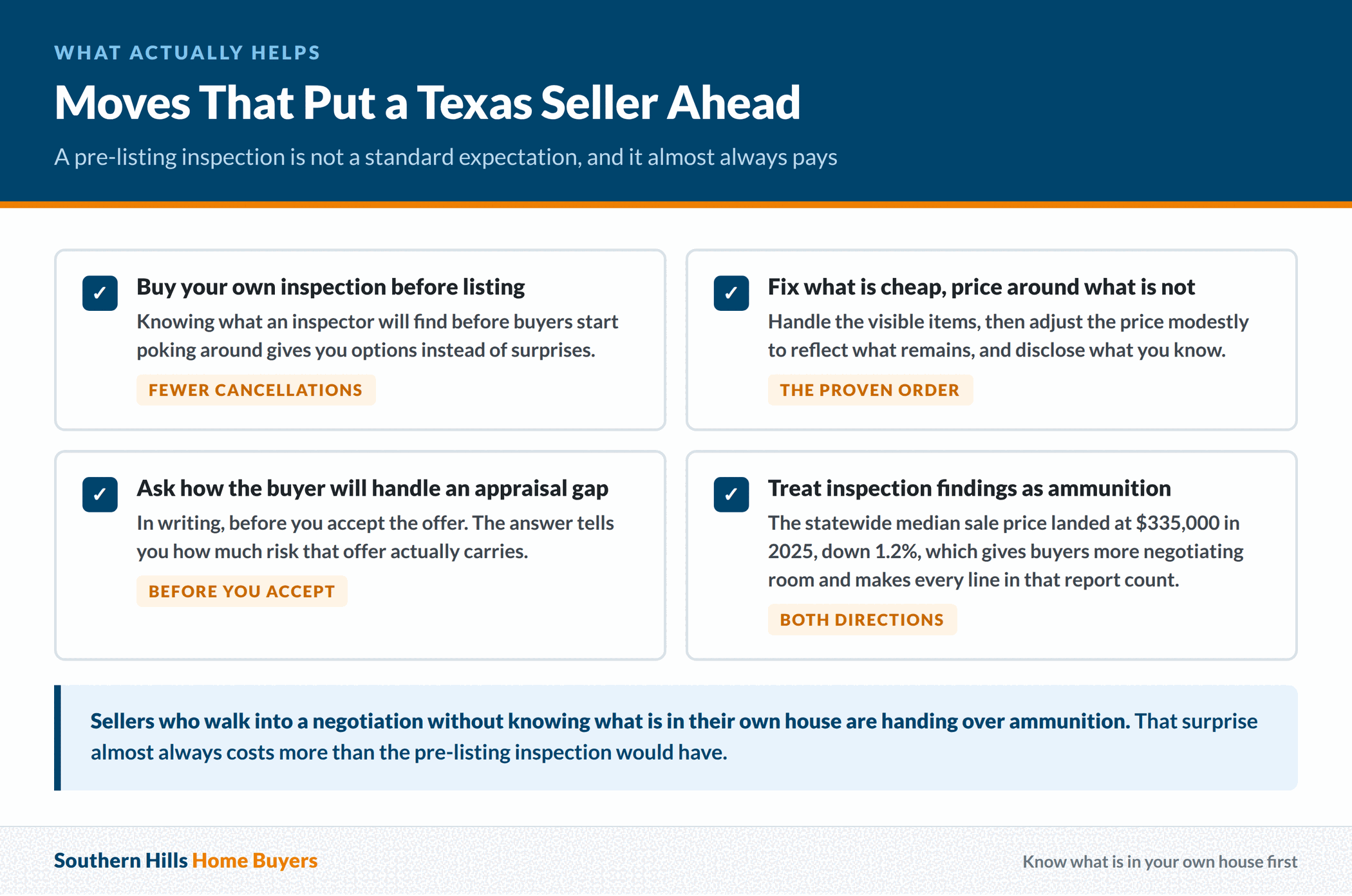
One practical move gets overlooked by nearly every seller I meet. Before you accept an offer, ask the buyer’s agent in writing how the buyer plans to handle an appraisal gap if one shows up. Getting that answer up front saves a lot of pain later, and I’ve watched transactions unravel in week three over exactly this question. If the math on inspection repairs and appraisal risk doesn’t work for you, reach out to Southern Hills Home Buyers and see what a direct offer looks like. No inspection contingency, no appraisal, no guessing.
Frequently Asked Questions
Who Pays for the Appraisal in a Texas Real Estate Transaction, the Buyer or the Seller?
In the large majority of Texas transactions, the buyer pays for the appraisal, not the seller. The buyer’s lender orders it to protect the loan, so the cost falls on the borrowing party and shows up in closing costs. Sellers can agree to cover it as a negotiated concession, and that happens most often in a buyer’s market where competing offers are thin.
Who Is Generally Responsible for Paying the Appraisal Fee?
The borrower, meaning the buyer, carries the appraisal fee on most financed transactions. The lender picks the appraiser and orders the report, but the charge lands on the buyer, either upfront or at closing. In a cash sale no lender-required appraisal exists, so neither side owes anything for one unless the purchase contract says otherwise.
Who Pays Title Fees at Closing in Texas?
Title fees in Texas usually get split between buyer and seller, though the exact split is negotiable and spelled out in the purchase contract. Sellers commonly cover the owner’s title policy while buyers pay for their lender’s policy. Your title company can walk you through the specific breakdown for your transaction before closing day.
If you’re trying to work out whether a traditional sale or a direct sale fits your situation better, we’re glad to talk through the numbers with you. No pressure and no obligation. Southern Hills Home Buyers has worked with sellers across Texas in every kind of circumstance, and sometimes the useful answer is just an honest conversation. You can reach them at southernhillshomebuyers.com.
Appraisal and Inspection Costs in the Dallas-Fort Worth Metroplex
The Metroplex sits well above the statewide median, which raises the stakes on any appraisal gap. As of July 2026 the median listing price across the Dallas-Fort Worth-Arlington metro ran about $439,000. Median days on market sat at roughly 54 days, according to Federal Reserve Economic Data. A five percent appraisal shortfall on a Texas median home is one conversation. The same five percent here is another, and it’s why DFW sellers should ask about the buyer’s gap plan before accepting an offer.
We buy houses throughout the Metroplex with no lender, no appraisal and no inspection contingency. Inside the city limits we’re the cash home buyers in Dallas sellers call when financing falls apart at the appraisal. We also buy in Fort Worth, Keller, Plano, Carrollton and Lewisville.
Lost a Buyer at the Appraisal? Let Us Take a Look
Maybe a financed closing just collapsed on you at the appraisal. Or you’re staring at an inspection report you don’t want to negotiate line by line. Either way, we’re happy to look at the property and give you a straight number on it as it sits. No pressure and no obligation. Southern Hills Home Buyers has closed on houses across the Dallas-Fort Worth Metroplex with deferred maintenance, foundation questions and every other finding that scares a financed buyer off. You can also read other questions sellers ask us.
Ready to get started? Reach out to Southern Hills Home Buyers or fill out the form below, and we’ll get back to you with a straight answer, usually the same day.