![Cost to Rebuild a House After a Fire In [market_city]](https://image-cdn.carrot.com/eyJidWNrZXQiOiJwcm9kdWN0aW9uLmNhcnJvdC11cGxvYWRzLm9uY2Fycm90LmNvbSIsImtleSI6InVwbG9hZHMvc2l0ZXMvMjEyODQvMjAyNi8xMC9Db3N0LXRvLVJlYnVpbGQtYS1Ib3VzZS1BZnRlci1hLUZpcmUucG5nIiwiZWRpdHMiOnsicmVzaXplIjp7IndpZHRoIjoxMTUyfSwidG9Gb3JtYXQiOiJ3ZWJwIiwid2VicCI6eyJxdWFsaXR5Ijo3MH19fQ==)

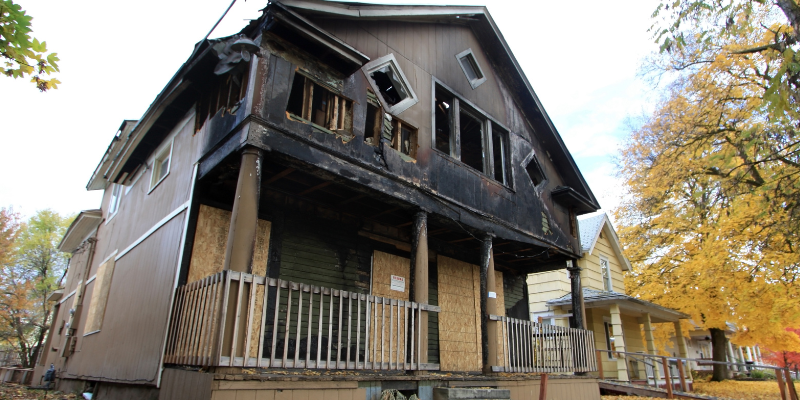
A kitchen fire that burns for four minutes can cost more to fix than a full remodel that took four months to plan. That gap is where homeowners get stuck once the trucks pull away and the street goes quiet. The National Fire Protection Association’s fire loss report, released in November 2025, found that a home fire was reported about every 96 seconds in 2024. They happen all the time. Clear cleanup numbers are harder to find.
How Much Does It Cost to Rebuild a House After a Fire?

You don’t have to decide anything this week. I say that first to each homeowner I meet at a kitchen table with a soot-smudged folder of estimates. Fire rebuild pricing falls into three rough tiers, and once you know your tier, the other decisions get easier.
Say the fire stayed in a room or two, and smoke drifted through the rest of the floor plan. You’re likely looking at restoration instead of reconstruction. LawnStarter’s 2026 cost data puts the national average for fire and smoke damage restoration at $20,470, with most jobs landing between $2,900 and $38,325. That covers cleaning, deodorizing, hauling, and some repairs to finishes. If you want a crew to handle it, here’s a list of fire damage restoration companies available in Texas worth calling for bids.
Partial reconstruction sits in the middle tier. HomeGuide’s 2026 guide starts partial rebuild work at about $50 per square foot. If the whole back half burned out, that rate adds up quickly.
A total loss is where the full cost to rebuild a house after a fire shows up. HomeGuide puts a full rebuild at $180 to $450 or more per square foot. Run that on an 1,800-square-foot house and the structure alone lands between $324,000 and $810,000. Land, utilities, and site work aren’t in that figure.
Your insurer decides whether any rebuild is survivable. Replacement cost value coverage pays to rebuild with materials of similar kind and quality, up to your dwelling limit. Actual cash value takes depreciation off first. On a thirty-year-old roof, that cut stings, and I’ve watched it happen more than once while buying older houses. When did you last read your declarations page? Most people haven’t looked since closing day, and building costs have outrun many dwelling limits.
You can see underinsurance after a total loss in the survey numbers. A United Policyholders survey of Los Angeles wildfire survivors found that 69 percent were underinsured, with an average shortfall of $247 per square foot. A gap that size leaves most families choosing between a construction loan and a sale. Most of them pick the sale once they see the rebuild spreadsheet.
If rebuilding no longer makes sense, Southern Hills Home Buyers can make you a cash offer for the fire-damaged house, so you can sell it as-is without taking on the cost and hassle of rebuilding.
What Insurance Covers After a Fire, and What It Leaves Out
“My policy covers fire, so I’m fine.” I hear that sentence more than any other, and it’s only half true. A standard homeowners policy pays for the dwelling, detached structures, personal property, and the extra cost of living elsewhere. Each one carries its own limit on your declarations page. Your deductible comes out first, and whatever’s past the dwelling limit is yours.
Personal property is where the gap tends to open after a loss. Many policies pay actual cash value on belongings, which knocks off age and wear. That five-year-old couch won’t pay out close to the price of a new one. Replacement cost coverage on contents closes the gap for a higher premium. A room-by-room video on your phone makes it far easier to prove what you owned.
Some bills your policy won’t touch at all. Your mortgage payment keeps coming, and loss-of-use coverage won’t pay it. Insurance.com’s guide to additional living expenses explains that ALE only pays the difference between your normal spending and what being displaced costs, like hotel stays and restaurant meals. Insurers cap it by dollar amount, by time, or both, so check before you sign a long lease. Keep all your receipts.
Mold is the other blind spot. The EPA tells homeowners to dry water-damaged areas within 24 to 48 hours to prevent mold growth, and firefighting leaves a lot of water behind. Plenty of insurance policies exclude mold or cap it low. Hire a water mitigation crew early and save the invoice for your adjuster.
Code upgrades bite too. Your city may require new wiring or hardwired smoke detectors before it signs off on the rebuild. Ordinance or law coverage pays for that gap, if your policy includes it. Older homes feel this one the most. If those upgrades push the repair bill past what the house is worth, we buy homes in Texas in as-is condition, fire damage included.
A few years back, a young couple in Mesquite, Texas, called me after a stovetop fire took out their kitchen. The restoration bid came in higher than the kitchen was worth, and smoke had reached the drywall down the hall. Fixing it meant months of contractors and paperwork on a house they couldn’t live in. They wanted to know what else they could do.
If rebuilding feels like more than you want to take on, you can also contact us for a cash offer on the fire-damaged house. We’ll look at the property and give you a straightforward option without requiring you to rebuild first.
How Is Debris and Demolition Handled in a Fire-Damaged House?
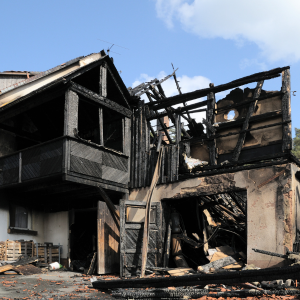
Most people assume insurance covers the dumpsters. It does, partly. The debris removal line on an adjuster’s first estimate seldom matches what a demolition crew charges after walking the structure, and it can also leave you with restoration costs the initial estimate didn’t account for. Those roll-off containers fill with charred framing, melted vinyl, wet insulation, and almost all the soft stuff in the house. Disposal gets billed by weight, and soaked material weighs a lot more than dry.
Mid-century houses add a wrinkle. They often contain asbestos in floor tile, duct wrap, or siding, plus lead paint on the trim. Testing has to happen before demo, because disturbing those materials turns cleanup into a regulated abatement job. Your local permitting office can tell you which approvals a demolition needs, and someone there will often answer by phone.
Partial demolition is harder than a full teardown. A crew taking out only the burned wing has to brace what’s left standing and weatherproof the open side before the next rain.
I’ve walked into houses eight weeks after a fire where the smoke was the smallest problem. Water had sat in the crawlspace, no one ran dehumidifiers, and black growth climbed every stud bay.
HomeGuide’s 2026 breakdown puts a structural inspection at $350 to $900. Skipping it is the worst way to save money in this whole process. An engineer’s report tells you whether the foundation or roof trusses took damage and whether your insurer’s repair estimate holds up. Some homeowners see a demolition bill before any rebuilding starts and decide to sell the property as it sits. That’s a fair answer too.
What Happens to Electrical and Plumbing Systems After a Fire?
A seller once showed me an electrical panel that looked perfect from the front. When the electrician pulled the deadfront, he found insulation melted off four circuits where heat had rolled through the wall behind it.
Fire treats building systems that way. Heat damages wiring at temperatures well below the point where anything visibly burns. Damaged wire often doesn’t fail right away. It fails later, as a short inside a finished wall.
HomeGuide lists electrical repair after a fire at $2,000 to $6,000 and up, depending on how much wiring sat in the heat zone. A full rewire on a total loss costs far more. Your electrician has to trace every circuit that passed through the damaged area, since cable runs cross framing in ways no one writes down. If you’d rather avoid taking on those repairs, a cash-for-houses company in Fort Worth and other Texas cities may be able to make a cash offer for the property as-is.
Plumbing reacts differently, since PEX and CPVC lines soften, deform, or melt. Copper takes more heat, though soldered joints can let go under pressure later. Cast iron drains can crack when hot pipe meets cold firefighting water. Water heaters and furnaces that flames or heavy smoke reached get replaced, and adjusters seldom argue that line item.
Of everything in the rebuild, this is the part where I’d never skip a permit. Electrical and plumbing work both need licensed trades, permits, and inspections in nearly every jurisdiction. Unpermitted work leaves a title and disclosure problem that follows the house to each future sale. I’ve watched closings fall apart over it, because lenders and insurance underwriters ask.
Gas is the one place to stop and call a professional. After a structure fire, the utility typically shuts off and locks the meter. Getting it back on means pressure testing the whole system. Don’t let anyone talk you into relighting a pilot before that test.
How Long Does a Fire Rebuild Take From Start to Finish?
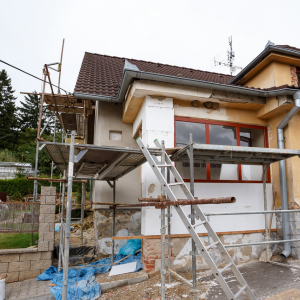
A woman in Tyler called me about her father’s house after a bedroom fire. She was eight months into settling his estate, and she’d been covering two mortgage payments out of her own checking account the whole time.
Time is the cost no one writes on the estimate sheet. Angi puts most fire restoration jobs between two weeks and 12 months, with an average of about four months. A job confined to one room takes weeks. Fires that damage several floors or the structure itself run 8 to 12 months, and the clock doesn’t really start until your insurer approves the work.
The claim is most often what wrecks the schedule. Each round with adjusters, engineers, and supplements for hidden damage adds weeks. Permitting adds more in cities where plan review backs up. Meanwhile, the mortgage, taxes, and premiums keep coming. Vacant home insurance costs more and covers less, and many standard policies limit coverage once a house sits empty for a while.
Selling changes the math. Median days on market nationally hit 60 in August 2026, per realtor.com data tracked by the St. Louis Fed, and that number counts every kind of listing. A fire-damaged listing sits longer and draws fewer buyers, because most lenders won’t finance a home without working systems. Freddie Mac’s 30-year rate climbed from 6.71 percent to 7.03 percent over September 2026. At those rates, few retail buyers want to finance a renovation on top of the house. Our guide to selling a fire damaged house in Texas fast covers how that kind of sale works.
If the rebuild numbers work for your family, build. If the insurance check won’t cover the gap, a direct cash sale can close in two or three weeks. You can also explore a sale with investor home buyers in Irving and the surrounding Texas cities, and you’re welcome to call and talk it through with no pressure.
Frequently Asked Questions
Is It Cheaper to Tear Down and Rebuild or to Renovate a Fire-Damaged House?
Renovation tends to win when the fire stayed in one area, and the structure, roof, and foundation came through intact. A teardown makes more sense once charred framing, damaged systems, and code upgrades push the repair cost close to what new construction would run. Get an engineer’s assessment and two contractor bids before you decide. Those cost a few hundred dollars, and they change the answer more often than you’d think.
Will My Insurance Company Still Pay If I Sell the House Instead of Rebuilding?
Usually yes, though the amount can change. Most replacement cost policies pay actual cash value first and release the remaining holdback only after repairs are finished. Sell before that work happens, and you’ll typically keep the actual cash value portion and give up the holdback. Read your policy’s loss settlement clause. If the mortgage is still open, expect the lender to be named on the check.
How Fast Can a Cash Buyer Close on a Fire-Damaged Property?
Two to three weeks is typical once the title work is clear. There’s no appraisal, no lender underwriting, and no repair list. Open insurance claims, probate, or liens can stretch that timeline, so it helps to mention them in the first conversation instead of the third.
If you’re sitting with a fire-damaged house and a stack of estimates that don’t add up, Southern Hills Home Buyers can provide a second opinion at no cost. Send us the address and tell us what the adjuster said, or reach out to us at (214) 225-3042, and we will give you a straight number along with our honest read on whether rebuilding or selling serves you better. No pressure, no obligation, and no hard feelings if you decide to keep the house and build it back.
Helpful Texas Blog Articles