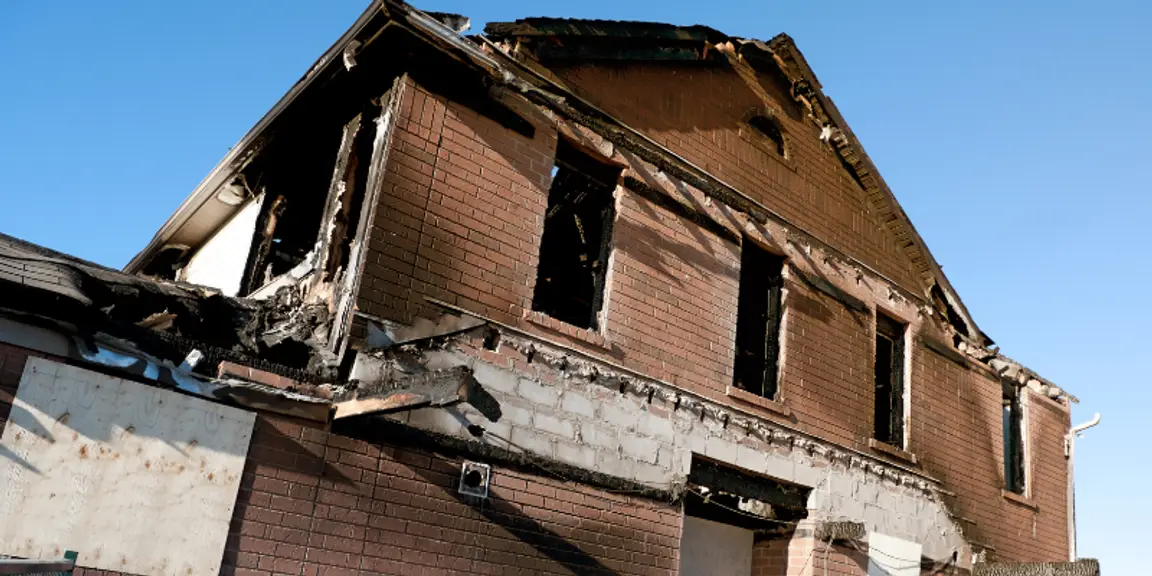

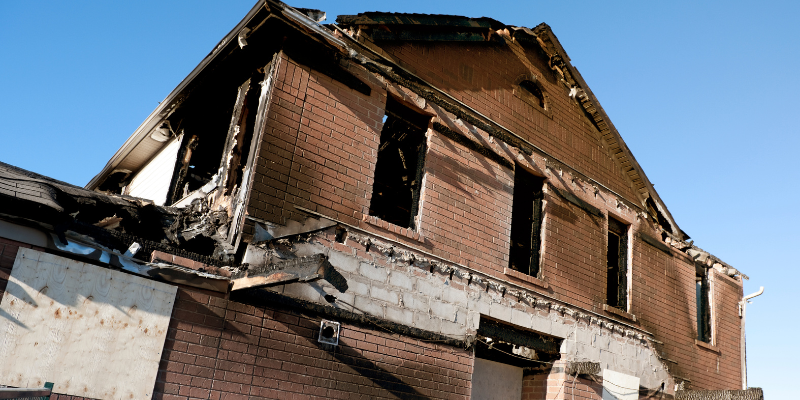
A fire hit your property on a Tuesday night. By Wednesday morning, you’re standing in the driveway staring at a house that looks nothing like the one you owned 18 hours ago. Maybe it’s total devastation. Maybe it’s one room and a lot of smoke. Either way, the question that lands on your chest isn’t about insurance or permits. It’s simpler and heavier: what do I do with this now?
Selling a fire-damaged house in Texas is a decision thousands of owners face every year, scattered across Sugar Land and Seguin, Waco and League City, Killeen and the Katy suburbs. Some rebuild. Some walk away. Most never find out how many options sit between those two extremes, and that gap is where the costliest mistakes happen.
This article covers every path available, what each one costs you, and where sellers consistently leave money behind. By the end, you’ll know what your situation calls for.
What Is a Fire-damaged House and How Does It Affect Your Property Value in Texas?
As of June 2026, the median sale price across Texas sat at $347,911. Pull a fire through even a modest house, and that baseline can evaporate in a matter of days. A fire-damaged property isn’t simply a house that needs cosmetic work. It’s a home carrying layered damage across multiple systems (structural, electrical, and smoke), and buyers, lenders, and appraisers treat it accordingly.
Fire does three kinds of harm most people don’t separate. Direct flame damage is the obvious one: burned walls, charred framing, destroyed roofing. Less obvious is heat damage, which can warp structural members, crack masonry, and compromise load-bearing components without leaving a single black mark. Smoke, soot, and water make up the third category, which is what trips sellers up. Direct flame burns materials outright, heat warps structures and can weaken foundations, and smoke spreads through HVAC systems and into porous materials throughout the home (I’ve seen it reach closets two rooms away).
Any one of those three categories can make a home unfinanceable. Conventional mortgage lenders won’t touch a property that fails a standard inspection, and a house with active smoke contamination or structural concerns fails immediately. That single fact rules out most of your retail buyer pool before you even list the property.
Fire-damaged houses sold as-is typically go for somewhere between 30 and 50 percent below their pre-fire market value. That’s a wide range, and the spread depends almost entirely on two variables: the scope of structural damage and the local market around you. A small kitchen fire in a tight Houston neighborhood like Garden Oaks lands differently than a whole-home loss in a rural county with thin buyer demand (fewer investors are even watching those markets). Texas cash buyers may also consider fire-damaged properties in as-is condition, which can give sellers another option when extensive repairs aren’t practical.
“Fire stigma” is real and measurable. Even after full repairs, fire-damaged homes tend to sell at a discount to comparable properties that were never damaged, because buyers worry about hidden issues that survived the restoration. That discount doesn’t disappear just because you spent $50,000 fixing everything. Knowing that changes how you run your repair-versus-sell calculation, and we’ll work through that calculation in detail below.
What Should You Do Immediately After a House Fire in Texas?
At 7 a.m., the insurance adjuster called. Two hours later, a contractor showed up uninvited with a clipboard and a demolition crew idling at the curb. That sequence plays out constantly after house fires in Texas, and homeowners who say yes to that contractor on day one often regret it by day 30.
Your priority isn’t cleanup. It’s documentation. Photograph and video every inch of damage before anything is moved, removed, or touched. Texas law will later require you to provide written disclosure of property conditions, and that disclosure will only be as accurate as your records. You can’t disclose what you failed to document.
Call your insurance company to report the loss and open a claim before you authorize any contractor to set foot on the property. Most homeowners don’t realize their policies might cover additional living expenses when fire damage makes the home uninhabitable; if you can’t stay in the home because of the damage, your policy might cover hotel costs or other temporary housing expenses. A lot of adjusters don’t volunteer that information up front, so ask directly.
Secure the property against unauthorized entry. If the fire created structural openings, board them up or have a licensed contractor do it, but get written approval from your insurer before spending money on anything. Board-up costs are typically reimbursable; work done without authorization sometimes isn’t.
One pattern worth flagging: sellers who act on emotion in the first 72 hours make their situation harder. Cleaning everything up, stripping the damaged materials, and making the house “presentable” feels productive. In practice, it destroys the evidence that your insurance claim depends on. Slow down. Let the process work in order.
How to Assess the True Extent of Fire Damage to Your Texas Home
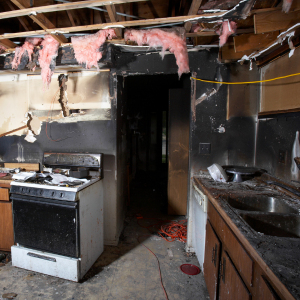
Eyeball the damage yourself, price accordingly, and you’re set up for a brutal negotiation. What you see on a walk-through is rarely the full picture, and the gap between visible damage and real damage is where sales fall apart.
Structural engineers and top-rated fire damage restoration companies have tools and knowledge a homeowner doesn’t. They check framing for heat-related brittleness, test electrical panels for arc damage, pull back drywall to look for smoke in wall cavities and insulation, and check HVAC ductwork for soot. Each of those systems is both a repair cost and a disclosure item you’re legally required to address.
Restoration costs vary by region. Angi puts the average fire damage restoration in Dallas at roughly $29,000, on a range that runs from about $4,400 to $58,000 depending on how far the damage spread. A kitchen fire in a Cypress-area home might run $15,000 to $25,000. A whole-home loss in a larger house in Southlake or The Woodlands can land well above that average.
Get at least two professional assessments before you decide to repair or sell. One from a licensed structural engineer if the framing or foundation is in question, one from a certified fire restoration company. Bring the written findings to any conversation with a cash buyer. Sellers who show up with documented assessments consistently get stronger offers than sellers who say “I think it’s mostly the kitchen.”
Water damage catches people off guard every time. Firefighters use hundreds or thousands of gallons to put out a house fire, and that water can do as much harm as the flames. It soaks floors, walls, and the foundation, and mold can start growing in under 24 hours. A fire that looks contained to one room often leaves water and mold damage across multiple floors. Your assessment needs to capture all of it.
If the damage feels overwhelming, you can skip the repairs and get a cash offer instead. Contact us to discuss your property and see what we can offer based on its current condition. No need to make costly repairs first.
What Are Your Options for Selling a Fire-damaged House in Texas?
Texas sellers of fire-damaged homes have four primary paths, and each one serves a different set of circumstances. List with a traditional real estate agent. Your agent puts the property on the MLS, often targeting owner-occupant buyers who plan to renovate or investors browsing the MLS. This approach gives you maximum market exposure. The downside: most financed buyers can’t purchase a fire-damaged home because lenders won’t approve mortgages on properties that fail habitability standards. Your buyer pool shrinks to cash buyers anyway, and you pay agent commissions on top of it. For sellers with lighter damage and strong equity, this can still generate competition and a stronger price.
Sell directly to a real estate investor or cash buyer. This is the fastest path and the one that requires the least from you as the seller. No repairs, no showings, no inspection contingencies, no mortgage approval risk. The trade-off is that investors price in their repair costs, carrying costs, and profit margin, so the offer reflects the home’s current condition rather than its post-repair value. A cash-for-houses company in Irving and other Texas cities can provide a direct offer based on the property’s current condition.
Repair and then sell. For sellers with modest damage, a solid insurance settlement, and the capacity to manage a months-long project, restoring the home before listing can produce a higher net outcome. Just model the carrying costs honestly before committing to this path.
Auction. Fire-damaged properties sometimes sell through auction companies, which can generate competitive bidding among investors. Auction fees vary, and reserve prices can be tricky to set correctly. This option works better for properties with broad investor appeal in major metros like Dallas, Houston, or San Antonio, where the investor buyer pool is deep.
Is It Better to Repair or Sell Your Fire-damaged House As-is in Texas?
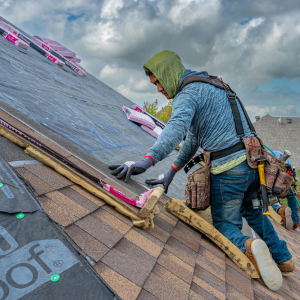
Repair costs in Texas are real and variable, and the cause of the fire moves the number as much as the size of the house does. Electrical fires run $12,000 to $23,000 because they damage hidden systems; kitchen oil fires run $12,000 to $20,000 and leave stubborn, greasy soot; gas fires, which create intense heat, run $14,000 to $20,000. Those are restoration costs alone, before carrying costs.
Permit fees and inspections come off the top. Temporary housing, storage, and utilities can add another $4,000 to $12,000 per month while repairs are ongoing, and homeowners remain responsible for the mortgage, taxes, and insurance throughout. A six-month restoration drags six months of carrying costs behind it, which can easily consume whatever price premium the repairs were supposed to generate.
The timeline alone changes the math. Minor repairs take two to four months, moderate restorations take four to eight months, and a full rebuild can stretch from eight to eighteen months. Set that against the fact that Texas homes were sitting on the market for a median of 69 days as of June 2026 under normal conditions, with no fire history to overcome. A restored fire-damaged home still faces the stigma discount and still needs time on the market after months of repair work, leaving you well over a year away from a closing table.
Selling as-is wins when repair costs exceed 30 percent of the pre-fire market value, when you’re carrying a mortgage you can’t sustain during a long restoration, or when you’re managing the property from out of state. Repairing first can make sense when damage is limited to one room, the home carries significant equity, and you have the cash and time to manage the project without bleeding dry. Most sellers fall into the first category, not the second.
If you’re weighing these two paths and want someone to run the numbers with you honestly, Southern Hills Home Buyers can give you a no-obligation cash offer so you have a real number to compare against your repair estimates.
Why Texas Homeowners Choose to Sell Fire-damaged Homes As-is
Sell before you finish repairs, and you forfeit the RCV holdback on a Replacement Cost Value policy. Depending on the loss, that’s $20,000 to $60,000 in claim value you never collect. It’s often the biggest variable in the repair-versus-sell decision, and most sellers find out too late.
So why do so many Texas homeowners sell as-is anyway? The reasons are mostly practical.
Cash buyers absorb the risk. Sell a fire-damaged home to an investor, and the repair burden moves to them. No contractors to manage, no permits to chase, no cost overruns to eat. The investor prices those risks in, which is why the offer sits below post-repair market value. What you get in exchange is a set dollar amount and a set closing date.
Then there’s the mortgage. Your lender is named as payee on the policy, and the standard Texas mortgage contract hands the lender control of insurance proceeds once a claim crosses a threshold or the damage affects the lender’s collateral. Sellers who plan to pocket the proceeds and move on often find the lender controls disbursement instead. A qualified real estate attorney can structure the sale so lien payoffs are handled right.
Foreclosure pressure drives plenty of these decisions, too. Fires tend to hit households already stretched thin. Lost rental income, a house nobody can live in, and interrupted paychecks push payments behind fast. An as-is sale to a cash buyer can close in weeks, which is sometimes the only path that beats an auction date.
The Texas market plays a part as well. That 69-day median holds statewide, and inventory has grown enough to favor buyers. If a clean home needs more than two months to move, a fire-damaged one on the MLS faces a far longer road.
What Are the Legal Disclosures Required When Selling a Fire-damaged Home in Texas?

In Texas, whether or not you know of previous fires in the home is one of the specific questions listed in the Seller’s Disclosure, and you must disclose past fires if you know they occurred, whether or not the fire was the result of anything mechanical, and even if the damage has since been repaired.
Texas Property Code Section 5.008 requires sellers to provide written disclosure of property conditions using the official TREC form or Texas REALTORS form, and that form covers walls, roof, floors, doors, driveways, electrical systems, plumbing, HVAC, and specifically asks about problems like previous fires. This is a statutory requirement, not optional disclosure language.
Failing to disclose known defects exposes sellers to liability under the Texas Deceptive Trade Practices Act. Where the conduct was knowing, a court can award up to three times the buyer’s economic damages. In a fire situation, that could include repair costs, alternative housing costs, and consequential economic harm.
If a seller becomes aware of new information or issues after completing the disclosure form but before the sale is finalized, they’re obligated to update the disclosure to reflect that new information. So even if you learned about hidden water damage during the selling process, after you’d already signed the disclosure form, you have a duty to update it.
Cash sales to real estate investors sometimes involve abbreviated paperwork, but your disclosure obligations don’t disappear in those transactions. Disclose fully in every scenario. The legal risk of omission is not worth whatever you think you might gain by staying quiet.
How Cash Buyers Determine the Value of a Fire-damaged House in Texas
For a long time, I thought investors priced these properties with a rough gut-check. They don’t. The model is more methodical than most sellers expect, and knowing it helps you judge whether an offer is fair.
It starts with ARV, the after-repair value. The buyer researches what the home would sell for, fully restored, using comparable sales from the same neighborhood or submarket. In the Heights in Houston or McKinney’s Craig Ranch, comps are plentiful, and the ARV lands tight. In rural markets, the investor leans on a wider radius and accepts more uncertainty.
From ARV, they subtract what it costs to bring the house to a sellable condition. This is where the professional assessments you gathered matter. An investor guessing at hidden structural damage prices that guess conservatively. Show up with two contractor bids, a structural engineer’s report, and the fire department’s incident report, and the investor has real data to work from. Better data usually means a higher offer.
Carrying costs go in too: property taxes (Texas rates run high), insurance during renovation, utilities, and the cost of money for however many months the project takes. Then comes a profit margin, because this is a business.
The final number sits below ARV minus repairs. Sellers sometimes read that gap as greed. The more accurate read is risk pricing. Fire damage expands once walls come down, and I’ve watched scopes of work double after demo day on houses that looked simple from the street. The investor absorbs that risk. Investor home buyers in Garland and surrounding cities in Texas absorb that same risk when evaluating fire-damaged properties. The offer reflects it.
Frequently Asked Questions
Does a House Lose Value After a Fire?
Yes, and the loss can be significant regardless of whether repairs are made. A fire-damaged home sold as-is will typically trade well below its pre-fire market value. Even after a full restoration, buyers often remain cautious, which applies downward pressure on price because of concerns about hidden damage and long-term structural integrity. The extent of the value loss depends on how severe the damage was, how thoroughly it was repaired, and how strong the local market is around your property.
How Do You Sell a Burned House?
Your main options are listing it on the MLS with a real estate agent, selling directly to a cash buyer or real estate investor, or restoring the home first and then listing it at or near market value. For most sellers dealing with serious fire damage, selling directly to a cash buyer is the fastest and most predictable path. You’ll want the fire report, your insurance claim documentation, and a professional damage assessment in hand before you start reaching out to buyers. That paperwork makes your offer conversations faster and your numbers more accurate.
Is It a Problem to Buy a House That Previously Had a Fire?
For buyers, a previously fire-damaged home that’s been properly restored with permits and documentation isn’t necessarily a bad purchase. The key is verification: you want to see the fire report, all permitted repair records, and a clean inspection from an independent inspector of your choosing. Homes that were repaired without permits or without full disclosure carry real risk, because hidden damage and unpermitted work can create liability that falls on the current owner. A thorough inspection and a title search that surfaces the full property history are the baseline before buying any fire-affected property.
If you want to talk through your options for a fire-damaged property in Texas, Southern Hills Home Buyers is here. No pressure, no obligation. Whether you’re two days out from the fire or two years into trying to figure out your next move, the right conversation starts with where you actually are. Reach out to us at (214) 225-3042 and let’s see what makes sense for your situation.
Helpful Texas Blog Articles
- Can a Hospital Put a Lien On Your House?
- How To Sell Your House On Facebook Marketplace
- Selling a Fire Damaged House in Texas
- How to Sell House and Move Out of State
- Tenant Damage to Property
- How to Sell a House on Craigslist in Texas
- Fire Damage Restoration Companies Available in Texas
- How Much Equity Do I Need to Sell My House in Texas
- How to Avoid Closing Costs in Texas
- Selling a Storm Damage House in Texas
- How to Get Out of Paying HOA Dues
- Can You Sue A Home Inspector